Tolfem Investments Limited


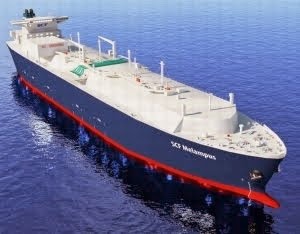
Crude Oil TankerTolfem Investments Limited is a leader in the of Nigerian Bonny Light Crude Oil (BLCO) sales market. As a privately held company, Tolfem Investments Ltd. is committed to and is focused on delivering reliable services to all her clients. Tolfem Investments Limited is determined to continue to grow in the energy sector and to become one of the recognized leaders in the Nigerian oil and gas industry.
Simplifying Nigerian Bonny Light Crude Oil Buying, BLCO

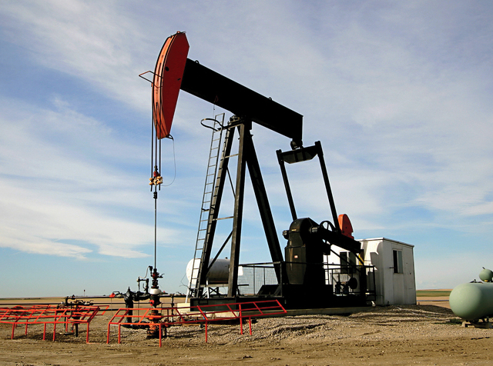
Crude Oil PumpTolfem Investments Ltd has an excellent track record of reliability in the supply of Bonny light crude oil, BLCO. We protect our buyers with 2% Performance Bond while we also expect protection from our customers with bank instrument from the world's top banks. We deliver on TTO, TTT, CIF and FOB basis.

If you wish to purchase Bonny Light Crude Oil from a reliable seller, contact us today to commence a comprehensive purchase procedure.

Crude Oil Tanker

Showing posts with label Tolfem Investment Limited. Show all posts

Saturday, 24 May 2014

Texas upstream petroleum economy sustains record run

The upstream oil and gas economy in Texas ventured further into uncharted territory in February, as rapidly increasing production, higher wellhead prices, and revised statewide employment numbers boosted the Texas Petro Index (TPI) to a record 300.6.


“Texas producers increased oil output by more than 22% in February compared to February 2013, and natural gas production was up about 1.0%,” said Karr Ingham, the economist who created the TPI and updates it monthly.


“Combined with higher wellhead prices for both commodities, the value of oil and gas produced in Texas during February increased by more than $2.85 bn in the past year to about $10.63 bn.”


Ingham noted that Texas producers recovered about 2.75 MMbpd of crude oil during February, “the most since 1980.”


Ingham said revised statewide employment estimates by the Texas Workforce Commission indicated the oil and gas industry continues to hire new workers at an impressive pace, faster than even the stout growth in prior years.


“In 2012, workforce commissioners revised total upstream payroll employment upward by about 3,200 jobs to more than 270,000 jobs, which reflected a growth rate of 10.2% at yearend compared to yearend 2011,” Ingham said. “In 2013, another 10,000 jobs were added to upstream oil and gas company payrolls, and that job growth has escalated in early 2014.


“At yearend 2013, the year-over-year rate of industry employment growth was about 3.7%; in February, the year-over-year rate of industry employment growth was nearly 5%, with about 13,400 jobs added over the last 12 months,” he said. “Since the industry downturn in 2009, about 103,000 jobs have been added to upstream oil and gas company payrolls.”


A composite index based upon a comprehensive group of upstream economic indicators, the Texas Petro Index in February moved above 300.0 for the first time to a record 300.6, up 7.6% compared to February 2013.  Before the current economic expansion, the TPI’s previous all-time high of 287.6 occurred in September and October 2008, after which the TPI declined to 188.5 in December 2009 before embarking upon the current growth cycle.


The Texas Petro Index is a service of the Texas Alliance of Energy Producers, the nation’s largest state association of independent oil and gas producers.


Providing useful resources, articles and writings on crude oil, other petroleum products, energy and gas. By Tolfem Investments Limited, online.

Wednesday, 21 May 2014

Alberta considers emissions rules to win support for oil sector

Alberta will likely implement energy efficiency measures and public transit when it revamps its climate-change policy to win support for its oil sector, the fastest-growing source of global warming in the country.


The Canadian province plans to have new regulations on emissions “in the near future” and may include a higher carbon price and strategies for cities and consumers to increase energy efficiency and deploy more renewable energy, Robin Campbell, Alberta’s environment minister, said in a phone interview.


“It’s important that as we look at our strategy going forward that we’re able to show real results,” the minister said from Edmonton. “The world is on us and they’re watching very closely what we’re doing.”


The struggle by Alberta’s oil producers for access to new markets, as reflected in President Barack Obama’s delays in approving TransCanada Corp.’s Keystone XL pipeline, is being made amid opposition to oil sands bitumen because of its higher carbon intensity and concerns around air and water pollution. Campbell’s comments counter former Premier Alison Redford’s stand that Alberta wouldn’t enact new greenhouse gas rules until the U.S. does the same for its oil and gas industry.


The province in 2008 targeted a reduction of greenhouse gas emissions by 50 million metric tons by 2020, which Campbell said he’s “comfortable” that Alberta will reach.


“Considerable improvement” is required by the province to help it reach its own, as well as Canada’s, emission targets, according to a study last year by the Calgary-based Pembina Institute, an environmental consultancy. Alberta’s electricity production is dominated by coal and natural gas and makes up half of the country’s emissions from power generation.


Meanwhile, the federal government has committed to reducing emissions by 17% by 2020 from 2005 levels, a target that will require stricter regulations for the oil and gas sector, the Pembina study said. Those rules have been delayed for several years under Prime Minister Stephen Harper.


Alberta, Canada’s wealthiest province per capita, may enact stricter regulations before the federal government imposes rules on the sector, Campbell said. “Politics can always throw a screw into things.”


“In Alberta, market access is important to us,” the minister said. “We want tidewater prices, so we have to get to the coast.” Alberta is one of two land-locked Canadian provinces.


Western Canada Select, the nation’s benchmark heavy crude, traded at a $19.10 discount to West Texas Intermediate at the close on Tuesday. The gap has been as wide as $42.50 in recent years and costs the Canadian economy C$50 million ($45.5 million) a day, according to the Canadian Chamber of Commerce.


As part of Alberta’s existing climate change mitigation efforts, the provincially-funded Change and Emissions Management Corporation yesterday announced the winners of a competition to find uses for carbon.


Alberta currently requires companies that emit more than 100,000 metric tons of greenhouse gases a year to cut emissions per barrel by 12% or pay a penalty of C$15 per ton. The proceeds from the levy are paid into a fund that companies can use to develop technology to cut carbon output. It has collected about C$400 million as of Jan. 2, according to the government.


The Alberta price for carbon compares to about 5 euros ($6.91) a ton for emissions permits on London’s ICE Futures exchange.


The new Alberta regulations need to result in “real reductions” of carbon dioxide, said Campbell. “Of course we’re not seeing the real reductions in the oil sands because demand for energy is growing.”


Providing useful resources, articles and writings on crude oil, other petroleum products, energy and gas. By Tolfem Investments Limited, online.

Thursday, 15 May 2014

Kashagan leak probe hindered by Caspian Sea ice, Total says

A probe into the cause of a leak at Kazakhstan’s largest oilfield depends on inspection of offshore installations that has to wait until ice melts on the Caspian Sea, one of the partners in the project said.


“It’s melting as we speak,” Arnaud Breuillac, Total SA head of exploration and production, said at an oil conference in Paris. “Until we have the result of this analysis, we can’t say what is the extent of the problem or how long it’ll take to fix it.”


Output may resume at the end of the year after 180 km (112 mi) of pipelines are inspected, the field’s biggest stakeholder KazMunaiGaz National Co. has said. A full inspection of both oil and gas pipelines, each about 90 km long, was done using a probe known as an intelligent pig.


Kashagan, where production began in September after being delayed several times from the original plan in 2005, was producing about 60,000 bpd before a leak stopped the field on Oct. 9. The project included drilling from a man-made island to unlock crude 4.2 km under the seabed in a pressurized reservoir with a high concentration of poisonous sour gas.


“We have to confirm data from intelligent pigging inside the pipeline with calibrations from outside” to understand the data, Breuillac said today. “Hopefully we should know soon the potential work that has to be done to repair the problem.”


Should production start up this year “it would not be much,” he said.


Exxon Mobil Corp., Royal Dutch Shell Plc, Total and Eni SpA each hold 16.81% in the project. Japan’s Inpex Corp. owns 7.56%. State-owned KazMunaiGaz National Co. retains 16.88%. China National Petroleum Corp. bought an 8.33% stake in September.


Providing useful resources, articles and writings on crude oil, other petroleum products, energy and gas. By Tolfem Investments Limited, online.

Crude Oil Tankers