Tolfem Investments Limited


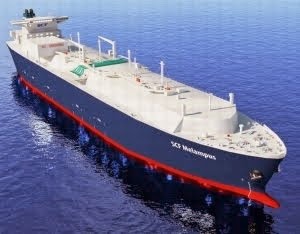
Crude Oil TankerTolfem Investments Limited is a leader in the of Nigerian Bonny Light Crude Oil (BLCO) sales market. As a privately held company, Tolfem Investments Ltd. is committed to and is focused on delivering reliable services to all her clients. Tolfem Investments Limited is determined to continue to grow in the energy sector and to become one of the recognized leaders in the Nigerian oil and gas industry.
Simplifying Nigerian Bonny Light Crude Oil Buying, BLCO

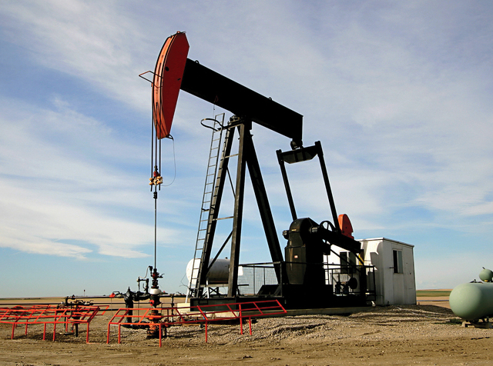
Crude Oil PumpTolfem Investments Ltd has an excellent track record of reliability in the supply of Bonny light crude oil, BLCO. We protect our buyers with 2% Performance Bond while we also expect protection from our customers with bank instrument from the world's top banks. We deliver on TTO, TTT, CIF and FOB basis.

If you wish to purchase Bonny Light Crude Oil from a reliable seller, contact us today to commence a comprehensive purchase procedure.

Crude Oil Tanker

Showing posts with label Crude Oil Sellers. Show all posts

Tuesday, 3 June 2014

Norway brings foreign minister home amid Ukrainian crisis, scraps Houston appearance

The worsening political and military situation in Ukraine is having far-reaching effects. As Ukrainian and pro-Russian protestors clashed over the weekend in eastern Ukraine, Norway felt compelled to bring home Foreign Minister BØrge Brende for consultations with other Western European countries about potential natural gas supply ramifications. Brende’s abrupt return to Europe also forced postponement of a long-awaited appearance Monday at Rice University’s Baker Institute, where he had been scheduled to discuss global energy challenges and opportunities, particularly for oil and natural gas, from Norway’s perspective.


Norway’s ambassador to the U.S., Kåre R. Aas, confirmed to a media briefing at the Baker Institute Monday morning that the situation in Ukraine had forced Brende to forgo his Houston visit, to return to Europe. Ambassador Aas and other Norwegian officials emphasized that while the path that the Ukrainian crisis will take over the next week is very difficult to predict, they believe that the situation ultimately requires a political solution. They pointed to Sunday’s emergency meeting of the U.N. Security Council as an important starting point in resolving the conflict. In the meantime, Norway is meeting with its NATO allies to consider what further measures, if any, should be taken to force the Russians to back down from their meddling in eastern Ukraine.


There is great concern about the short- and medium-term stability of natural gas imports coming into Western Europe from Russia, said the Norwegian officials. About one-third of European gas imports come from Norway, while roughly another third is sourced from Russia. What concerns the European countries is that half of that Russian gas has to transit pipelines that run through Ukraine. This means that 15% of Europe’s overall gas supply is directly threatened by the instability in Ukraine, which is an improvement over what could have been the proportion a few years ago. New Gazprom pipelines built via Belarus and the Baltic Sea to Germany have cut the volume of European gas imports transiting Ukraine from about 30% to 15%. Nevertheless, any significant disruption in gas supplies could threaten the fragile Western European economy.


For its part, Norway is producing 1.7 million bpd of liquids and 105 Bcm/year of natural gas. While officials confirmed that up to 70% of discovered and projected natural gas reserves in Norway have yet to be developed and put into production, adding significant capacity to the country’s gas output and exports is not a short-term proposition. Therefore, the ability to offset any Russian gas export shortfall in the short term is very small.


Ambassador Aas confirmed that Foreign Minister Brende remains committed to maintaining the special relationship between Norway and Houston, and that he will reschedule an appearance at the Baker Institute later this year.


Providing useful resources, articles and writings on crude oil, other petroleum products, energy and gas. By Tolfem Investments Limited, online.

Tuesday, 27 May 2014

Iran oil shipments highest since sanctions began, IEA says

Iran’s crude shipments in February were the highest since the imposition of sanctions and more than a limit agreed with Western powers in an interim nuclear deal, according to the International Energy Agency.


The country shipped 1.65 MMbpd to importing countries in February, the highest level since June 2012, the IEA said. March shipments, estimated to have fallen to 1.05 MMbpd, “will likely be revised upwards closer to February levels upon receipt of more complete data,” the IEA said.


“Imports of Iranian oil are running well above 2013 levels for the third consecutive month” and could remain high in April, the Paris-based adviser to 28 nations said in its monthly oil market report. Under the interim nuclear deal agreed in November, “Iran’s exports are supposed to be held at an average 1 MMbpd for the six months to end-July,” it said.


Iranian oil production plunged by 1 MMbpd, or 28%, from 2011 to 2013 after the U.S. and European Union banned imports of oil from the country and imposed financial sanctions. An interim accord easing restrictions on insurance for Iran’s oil shipments and freeing up cash held outside the country went into effect in January, in return for a suspension of some parts of the country’s nuclear program.


Crude shipments from Iran will probably average above 1.2 MMbpd over the six month period of sanctions relief, Richard Mallinson, geopolitical analyst at Energy Aspects, said by phone today from London.


Keeping production at the level of the last couple of months “will have a real knock-on effect in the diplomacy,” Mallinson said. “I don’t think it’s too late yet for Iran to moderate that short-term behavior, in order to rebuild some confidence in the talks and as they progress towards a final deal.”


Officials from Iran, the U.S., UK, France, Germany, China, Russia and the EU met in Vienna this week. “A lot of intensive work will be needed to overcome the differences,” between the two sides before a final July deadline for a nuclear deal, EU foreign policy chief Catherine Ashton said as talks ended April 9. Diplomats will meet again on May 13 for talks.


The IEA revised upward February import volumes of Iranian crude by 240,000 bpd after it gathered more complete data. China, India, and South Korea all imported more Iranian oil than originally estimated in last month’s report, the IEA said. The agency counts cargoes once they are received in importing countries.


Buyers permitted to import Iranian crude under U.S. sanctions are Turkey, China, Japan, India, South Korea and Taiwan. In March importers of Iranian oil expanded to include Albania and Syria, the IEA said. February data for Chinese, Indian and Korean imports were revised upwards by 168,000, 93,000 and 83,000 bpd respectively. Japanese data was revised down by 103,000 bpd.


Iranian crude stored on tankers fell from 32 MMbbl at the end of February to 22 MMbbl at the end of March, the agency said citing data from E.A. Gibson Shipbrokers.


Providing useful resources, articles and writings on crude oil, other petroleum products, energy and gas. By Tolfem Investments Limited, online.

Sunday, 11 May 2014

Canada needs to push harder on Gateway pipeline, Alberta minister says

Canada’s federal government isn’t doing enough to build support for Enbridge Inc.’s proposed pipeline to ship crude from the oil sands to the nation’s Pacific coast, said Alberta Finance Minister Doug Horner.


“The federal government needs to step up here a little bit” to convince aboriginal groups and the general public that the Northern Gateway pipeline is in the nation’s interest, Horner said in an interview at Bloomberg headquarters in New York. “We’ve suggested to them that they may want to get involved.”


Opposition by aboriginal groups and environmentalists is clouding Canada’s plans to develop Alberta’s oil sands, home to the world’s third-largest recoverable crude reserves. Producers such as Royal Dutch Shell Plc and Total SA are counting on projects such as Northern Gateway and TransCanada Corp.’s Keystone XL to ease a transportation bottleneck that has suppressed the price of Canada’s heavy crude, costing the economy C$50 million ($46 million) a day, according to the Canadian Chamber of Commerce.


The federal government should make it clear the pipeline is of national economic importance, said Horner. “You have to remember that a lot of what we do in western Canada creates economic activity and jobs in eastern Canada,” he said.


Harper’s government must decide whether to approve Northern Gateway by June. A regulatory panel said in December the project could move ahead under certain conditions.


British Columbia, the country’s westernmost province, has said it will only back the project if it meets five conditions, including greater engagement with aboriginals and increased financial benefits for the province. Local communities say there’s too much risk and too little benefit to having an oil pipeline cross their region.


Canadian Finance Minister Joe Oliver, who was the country’s natural resources minister until last month, told reporters today the government is constrained in what it can say until the cabinet issues its decision.


Horner’s comments followed a speech by former Canadian prime minister Brian Mulroney in which he called for a “strong national commitment” to export the nation’s natural resources to markets around the world, in particular Asia.


“We cannot sit back, contemplating our collective navel and expect customers to knock on our door,” Mulroney said yesterday. “We have to demonstrate convincingly that we are capable of doing what is required to earn their confidence that we are a reliable, efficient source of supply.”


Horner said he’s “cautiously optimistic” the U.S. will approve TransCanada Corp.’s Keystone XL pipeline, which would link the oil sands to refineries along the Gulf Coast.


President Barack Obama’s administration is reviewing the route, which was first proposed in 2008.


“We are not just focused on Keystone,” Horner said. “We are looking at all three of the opportunities that are there today -- that’s east coast, west coast and to the south.”


Horner also said he is “seriously considering” running to succeed Alison Redford as leader of Alberta’s ruling Progressive Conservative Party. Redford stepped down last month amid questions about her expenses and leadership.


Horner is also speaking today to the Canadian Association of New York.


Providing useful resources, articles and writings on crude oil, other petroleum products, energy and gas. By Tolfem Investments Limited, online.

Thursday, 8 May 2014

Delineation of the 6407/1-6 S gas/condensate discovery near in the Norwegian Sea

Wintershall Norge, operator of production licence 475, has concluded the drilling of appraisal wells 6407/1-7 and 6407/1-7 A.


The wells were drilled about 8 km northeast of the Tyrihans field and 5 km northeast of the 6407/1-6 S gas condensate discovery in production licence 475. The reservoir in this discovery consists of thin sandstone layers from the Lange formation in the Lower Cretaceous. The discovery was made in January 2013. The resource estimate for the discovery was then between 3 and 20 million standard cubic meter of recoverable oil equivalents.


The objective of well 6407/1-7 was to delineate the 6407/1-6 gas/condensate discovery higher up in the structure. A new appraisal well, 6407/1-7 A, was therefore drilled downflank to investigate reservoir thickness and lithology.


Well 6407/1-7 proved gas/condensate in two sandstone intervals with a net vertical thickness of 12 m and a gross reservoir thickness of 16 m. Well 6407/1-7 A proved gas/condensate in two sandstone intervals with a vertical thickness of 7 m and a gross reservoir thickness of 13 m.


The difference in pressure measurements between wells 6407/1-7, 6407/1-7 A and the discovery well 6407/1-6 S indicates that there is no communication between the appraisal wells and the 6407/1-6 S discovery. Well 6407/1-7 has therefore proven a separate discovery, and will be reclassified as a wildcat well.


Preliminary estimates of the size of the new gas/condensate discovery range from 1 to 4 million standard cubic meter of recoverable oil equivalents.


The resource estimate for the 6407/1-6 S gas/condensate discovery has now been downgraded to between 1 and 6 million standard cubic meter of recoverable oil equivalents. The licensees will consider the discoveries in conjunction with other nearby discoveries as regards future development.


This is the second and third exploration well in production licence 475. The production licence was awarded on 29 February 2008 (APA 2007).


Wells 6407/1-7 and 6407/1-7 A were drilled to vertical depths of 3,345 and 3,311 m, respectively, below the sea surface, the latter with a measured depth of 3,571 m. Both wells were terminated in the Lange formation in the Early Cretaceous. Water depth at the site is 280 m. The well has been permanently plugged and abandoned.


Wells 6407/1-7 and 6407/1-7 A were drilled by the Borgland Dolphin drilling facility, which will now proceed to production licence 550 in the northern part of the North Sea to drill wildcat well  31/2-21 S, where Tullow Oil Norge is the operator.


Providing useful resources, articles and writings on crude oil, other petroleum products, energy and gas. By Tolfem Investments Limited, online.

Monday, 5 May 2014

South Sudan rebels seize state capital, urge oil shutdown

South Sudanese rebels seized the capital of oil-rich Unity state, demanding companies in government-held territory suspend crude production and evacuate staff within a week.


Rebels allied with former Vice President Riek Machar took control of Bentiu today after battling government forces, Lul Ruai Koang, a spokesman for the insurgents, said in an emailed statement. South Sudan’s Defense Minister, Kuol Manyang Juuk, said rebels had “dislodged” government troops in the town.


The insurgents urge “all oil companies still operating in government controlled areas to immediately embark on gradual and voluntary closure of oil production,” Koang said. “Failure to comply with this request, the oil companies risk forced oil shutdown and the safety of their staff.”


South Sudan’s oil output has fallen by about a third since fighting erupted on Dec. 15 between factions loyal to President Salva Kiir and his former deputy Machar. The country is currently producing about 160,000 bpd from Upper Nile, the only state still pumping crude.


Violence has left thousands of people dead and forced more than a million to flee their homes, according to the United Nations. Machar in a March 27 interview vowed to seize oil fields in Upper Nile in a bid to starve the military of revenue.


“The recapturing of Bentiu marks the first phase of liberation of oil fields” controlled by the government, Koang said in the statement.


About 4,000 people have arrived at the UN’s base in Bentiu over the past two days, seeking shelter from fighting, Joseph Contreras, acting spokesman for the UN peacekeeping mission to the country, said today from the national capital, Juba.


Oil production in Unity state, estimated at about 50,000 bpd before it was suspended in December, is due to resume by July, the Petroleum Ministry said last week. A 3,000 bpd diesel refinery is due to be inaugurated near Bentiu at the same time.


Rebels attacked a refinery north of Bentiu yesterday, wounding foreign employees, Defense Minister Juuk said by phone from Juba. UN peacekeepers evacuated 10 workers from the Russian company Safinat, five of whom had sustained injuries, Contreras said.


“They damaged one of the crude oil tankers and they took a car,” Juuk said. The army has regained control of the facility and will retake Bentiu town from the insurgents, he said.


China National Petroleum Corp., India’s Oil & Natural Gas Corp. and Petroliam Nasional Bhd., are the main producers of South Sudan’s oil.


Providing useful resources, articles and writings on crude oil, other petroleum products, energy and gas. By Tolfem Investments Limited, online.

Saturday, 3 May 2014

OPEC sees lower demand as U.S. output rises

OPEC trimmed estimates for the amount of crude it will need to pump this year amid rising U.S. supplies, and predicted that a “supply buffer” will accumulate before demand peaks in the summer.


The Organization of Petroleum Exporting Countries, responsible for 40% of the world’s oil supply, will need to provide an average of 29.6 MMbpd of crude this year, according to its monthly market report. The assessment is 100,000 bpd lower than last month’s because of higher output from the U.S. and Canada, and in line with the group’s March production level. Oil inventories, currently “tight,” will rebuild as demand sags in the second quarter, it said.


Reliance on OPEC is being frayed as the U.S. pumps the most crude in more than two decades by tapping shale formations in North Dakota and Texas. Brent crude futures have lost 2.9% this year, trading for $107.58 a barrel today in London, amid speculation OPEC members Libya and Iran may restore supplies curbed respectively by political unrest and sanctions. OPEC would “accommodate” their return to the market, group Secretary-General Abdalla El-Badri said in Doha, Qatar, yesterday.


“Demand for OPEC crude for 2014 was revised down” from last month “reflecting the upward adjustment of non-OPEC supply,” the group’s Vienna-based secretariat said in the report. “Oil markets have now entered into a period of lower demand, which provides the opportunity to re-build tight product inventories.”


OPEC’s 12 members reduced production by 626,200 bpd to 29.6 MMbpd in March because of declines in Iraq, Angola and Libya, according to secondary sources cited by the report. Iraqi production fell most, declining 288,400 bpd to 3.2 MMbpd, according to the report, which didn’t specify a reason.


The second-largest drop was in Angola, where output fell by 154,800 bpd to 1.5 MMbpd, followed by Libya, where supplies slipped by 117,700 a day to 243,000 a day. Saudi Arabia, the group’s biggest member, trimmed output by 80,500 bpd to 9.7 MMbpd.


The group boosted its projection of supplies from outside OPEC by 60,000 bpd. Non-OPEC producers, led by the U.S., Canada and Brazil, will increase output by 1.4 MMbpd in 2014 to 55.6 MMbpd.


The organization kept its forecast for global oil demand in 2014 stable. World consumption will increase by 1.1 MMbpd, or 1.3%, to 91.2 MMbpd, the report indicated.


OPEC’s 12 members are Algeria, Angola, Ecuador, Iran, Iraq, Kuwait, Libya, Nigeria, Qatar, Saudi Arabia, the U.A.E. and Venezuela. The group will next meet on June 11 in Vienna to discuss output targets.


Providing useful resources, articles and writings on crude oil, other petroleum products, energy and gas. By Tolfem Investments Limited, online.

Friday, 2 May 2014

Gastar Exploration resumes unrestricted Marcellus Shale production

Gastar Exploration reported that production from its Marshall County, West Virginia, operations has resumed with no restrictions following the successful re-routing of natural gas volumes through the Williams operated midstream system and the return to service of the pipeline that transports condensate from the field to processing facilities.


Gastar currently has 50 wells producing, with seven additional wells temporarily shut-in due to drilling and completion operations on the producing well pads. Current gross average daily production is approximately 67 MMcfpd of unprocessed natural gas and 1,900 bbl of condensate.


Gastar' s Marcellus production was completely shut-in on April 5 following the rupture of a natural gas pipeline operated by Williams Partners, and on April 9, production resumed at a restricted rate.


Gastar currently estimates that production for the second quarter was reduced by approximately 162,000 Mcf of residual natural gas, 4,900 bbl of condensate and 8,000 bbl of natural gas liquids as a result of this incident.


Providing useful resources, articles and writings on crude oil, other petroleum products, energy and gas. By Tolfem Investments Limited, online.

Sunday, 27 April 2014

Aker Solutions to supply subsea manifolds for Petrobras pre-salt fields

Aker Solutions won a contract worth more than $300 mn from Petrobras to supply eight manifolds that alternately inject water and gas to increase oil recovery from Brazil' s deepwater offshore fields.


The subsea manifolds, designed for water depths of 2,500 m, will be installed by Petrobras and its partners in deepwater pre-salt field developments.The units have a design life of 30 years and the first is scheduled to be delivered in 2016.
 
"We are pleased to work with Petrobras on its important and technically challenging pre-salt developments," said Oyvind Eriksen, executive chairman of Aker Solutions. "Brazil is a key market for our subsea technology and one of the fastest growing areas in the oil and gas industry."


The order will be executed by Aker Solutions' Brazilian subsea division. The unit last year began work to double its subsea equipment manufacturing capacity at a plant in Curitiba by 2015. About 70% of the contract with Petrobras will be procured and manufactured in Brazil.
 
"Aker Solutions is committed to delivering high local content in Brazil, where demand for complex subsea production equipment is growing," said Luis Araujo, president for Aker Solutions in Brazil.
 
The manifolds will play a key part in the crucial injection process that helps improve recovery from the fields.


Providing useful resources, articles and writings on crude oil, other petroleum products, energy and gas. By Tolfem Investments Limited, online.

Crude Oil Tankers