Tolfem Investments Limited


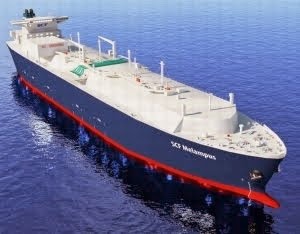
Crude Oil TankerTolfem Investments Limited is a leader in the of Nigerian Bonny Light Crude Oil (BLCO) sales market. As a privately held company, Tolfem Investments Ltd. is committed to and is focused on delivering reliable services to all her clients. Tolfem Investments Limited is determined to continue to grow in the energy sector and to become one of the recognized leaders in the Nigerian oil and gas industry.
Simplifying Nigerian Bonny Light Crude Oil Buying, BLCO

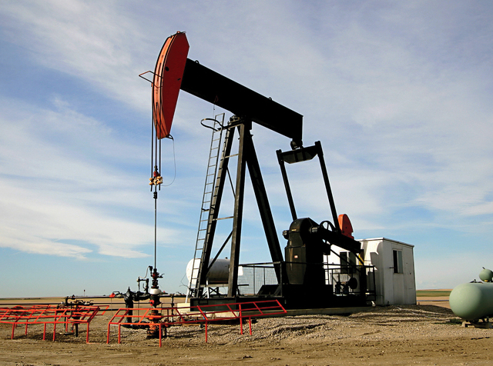
Crude Oil PumpTolfem Investments Ltd has an excellent track record of reliability in the supply of Bonny light crude oil, BLCO. We protect our buyers with 2% Performance Bond while we also expect protection from our customers with bank instrument from the world's top banks. We deliver on TTO, TTT, CIF and FOB basis.

If you wish to purchase Bonny Light Crude Oil from a reliable seller, contact us today to commence a comprehensive purchase procedure.

Crude Oil Tanker

Showing posts with label How To Buy Crude Oil. Show all posts

Monday, 19 May 2014

Kuwait sees rising crude production amid improved extraction

Kuwait plans to increase oil output 23% by 2020 as improvements in how crude can be extracted allow the third-largest producer in OPEC to pump more.


The country will boost supply to 4 MMbpd from about 3.25 MMbpd by using enhanced extraction methods, Kuwait Oil Co. CEO Hashem Hashem said at a conference in Kuwait City. The supplies include 300,000 bpd from northern oil fields and a similar amount of crude and condensates from the Jurassic natural gas project, he said.


“We have the reserves and we have a proven capability to advance projects in a timely manner; but there is always a risk that the skill mix in our organization may not be keeping up with the increased complexity of the reservoirs,” Hashem said. “It is time to be proactive and invite new approach from experience around the world to upgrade our capability.”


Oil Minister Ali Al-Omair yesterday said he saw no risk of oversupply in global oil markets because demand growth will match output increases. Brent, the benchmark for half the world’s crude, fell 2% this year on concern that increased supply from Iraq, Iran and Libya would outstrip demand and amid signs of slower economic growth in China.


Kuwait plans to spend $100 bn on oil and gas projects, according to the U.S. Energy Information Administration. It is the third-largest producer of the Organization of Petroleum Exporting Countries, after Saudi Arabia and Iraq.


As well as the additional crude supply, Kuwait plans to upgrade two of its three refineries to increase so-called clean fuels output, and build a fourth.


The nation is also building a refinery in Vietnam, planning one in China and another in India to secure markets for the crude it produces.


Enhanced oil recovery should lift production in northern fields including Sabriyah, Raudathain, Bahra and Abdali to 1 MMbpd, from about 700,000 bpd now, said Hashem. Another increase of 300,000 bpd to 350,000 bpd will come from condensates and crude produced by the Jurassic Gas project, he said. Kuwait Oil signed a deal four years ago to develop the deposit with Royal Dutch Shell Plc.


Development of heavy oil in fields across the country, including Ratqa, which require steam injection in reservoirs, will add 60,000 bpd by 2018, 120,000 bpd by 2020 and possibly 270,000 bpd by 2030, he said. A 1.2 billion-dinar ($4.3 billion) construction contract for the first phase will be awarded this year, he said.


Providing useful resources, articles and writings on crude oil, other petroleum products, energy and gas. By Tolfem Investments Limited, online.

Saturday, 3 May 2014

OPEC sees lower demand as U.S. output rises

OPEC trimmed estimates for the amount of crude it will need to pump this year amid rising U.S. supplies, and predicted that a “supply buffer” will accumulate before demand peaks in the summer.


The Organization of Petroleum Exporting Countries, responsible for 40% of the world’s oil supply, will need to provide an average of 29.6 MMbpd of crude this year, according to its monthly market report. The assessment is 100,000 bpd lower than last month’s because of higher output from the U.S. and Canada, and in line with the group’s March production level. Oil inventories, currently “tight,” will rebuild as demand sags in the second quarter, it said.


Reliance on OPEC is being frayed as the U.S. pumps the most crude in more than two decades by tapping shale formations in North Dakota and Texas. Brent crude futures have lost 2.9% this year, trading for $107.58 a barrel today in London, amid speculation OPEC members Libya and Iran may restore supplies curbed respectively by political unrest and sanctions. OPEC would “accommodate” their return to the market, group Secretary-General Abdalla El-Badri said in Doha, Qatar, yesterday.


“Demand for OPEC crude for 2014 was revised down” from last month “reflecting the upward adjustment of non-OPEC supply,” the group’s Vienna-based secretariat said in the report. “Oil markets have now entered into a period of lower demand, which provides the opportunity to re-build tight product inventories.”


OPEC’s 12 members reduced production by 626,200 bpd to 29.6 MMbpd in March because of declines in Iraq, Angola and Libya, according to secondary sources cited by the report. Iraqi production fell most, declining 288,400 bpd to 3.2 MMbpd, according to the report, which didn’t specify a reason.


The second-largest drop was in Angola, where output fell by 154,800 bpd to 1.5 MMbpd, followed by Libya, where supplies slipped by 117,700 a day to 243,000 a day. Saudi Arabia, the group’s biggest member, trimmed output by 80,500 bpd to 9.7 MMbpd.


The group boosted its projection of supplies from outside OPEC by 60,000 bpd. Non-OPEC producers, led by the U.S., Canada and Brazil, will increase output by 1.4 MMbpd in 2014 to 55.6 MMbpd.


The organization kept its forecast for global oil demand in 2014 stable. World consumption will increase by 1.1 MMbpd, or 1.3%, to 91.2 MMbpd, the report indicated.


OPEC’s 12 members are Algeria, Angola, Ecuador, Iran, Iraq, Kuwait, Libya, Nigeria, Qatar, Saudi Arabia, the U.A.E. and Venezuela. The group will next meet on June 11 in Vienna to discuss output targets.


Providing useful resources, articles and writings on crude oil, other petroleum products, energy and gas. By Tolfem Investments Limited, online.

Friday, 2 May 2014

Gastar Exploration resumes unrestricted Marcellus Shale production

Gastar Exploration reported that production from its Marshall County, West Virginia, operations has resumed with no restrictions following the successful re-routing of natural gas volumes through the Williams operated midstream system and the return to service of the pipeline that transports condensate from the field to processing facilities.


Gastar currently has 50 wells producing, with seven additional wells temporarily shut-in due to drilling and completion operations on the producing well pads. Current gross average daily production is approximately 67 MMcfpd of unprocessed natural gas and 1,900 bbl of condensate.


Gastar' s Marcellus production was completely shut-in on April 5 following the rupture of a natural gas pipeline operated by Williams Partners, and on April 9, production resumed at a restricted rate.


Gastar currently estimates that production for the second quarter was reduced by approximately 162,000 Mcf of residual natural gas, 4,900 bbl of condensate and 8,000 bbl of natural gas liquids as a result of this incident.


Providing useful resources, articles and writings on crude oil, other petroleum products, energy and gas. By Tolfem Investments Limited, online.

Saturday, 19 April 2014

Shell shelves plans to boost Ormen Lange gas output

Royal Dutch Shell Plc postponed a project designed to boost natural gas recovery from its Ormen Lange deposit offshore Norway, citing higher costs and doubts on reserves.


“The oil and gas industry has a cost challenge,” said Odin Estensen, chairman of the Ormen Lange Management Committee, in a statement. “This, in combination with the maturity and complexity of the concepts and the production volume uncertainty, makes the project no longer economically feasible.”


Shell and other oil companies including Statoil ASA are cutting spending amid rising costs and stagnating oil and gas prices. The delay at Ormen Lange, which delivers as much as 20% of the UK’s gas consumption, comes as the standoff between Russia and the European Union over the annexation of Crimea has raised concerns over fuel supplies to Europe.


The delay on the compression project was supported by partners Statoil, Dong Energy A/S and Exxon Mobil Corp. It was opposed by Norway’s state-owned Petoro AS, also a partner. Prime Minister Erna Solberg this month warned companies against “unacceptable” delays to recovery projects, saying they risk damaging the goodwill they enjoy from the government.


Shell shares dropped 0.6% to 2,200 pence as of 10:18 a.m. in London. Statoil fell 0.8% to 165.4 in Oslo.


The partners remain committed to maximizing recovery at Ormen Lange “in a sustainable manner,” said Shell, the operator of Norway’s second-largest gas field.


Norway, western Europe’s largest oil and gas producer, has seen output drop 20% over the past decade. The government is pushing for companies to maximize recovery from existing fields instead of moving on to more profitable projects. Statoil, Norway’s largest producer, has also announced it’s reviewing plans to build a new platform at the North Sea Snorre deposit to extract an additional 300 MMbbl of oil.


Shell said the timing of the Ormen Lange compression project wasn’t critical to the ultimate recovery rate at the field. “We’re fully aligned to the government’s steer to increase the recovery factor,” Kitty Eide, a company spokeswoman, said in an emailed reply to questions.


In a letter to the government in February, Shell said that a tax increase last year on oil and gas companies will make the Ormen Lange project less profitable, echoing other companies that have warned the change would hurt marginal projects.


“It’s not a deciding factor, but did not help the economics of the project,” Eide said. The company declined to provide details on investment or production-volume estimates for the compression project, or when the license partners expected to make a decision on a future project, she said.


Benchmark gas prices in the UK, where Ormen Lange’s production is shipped through the 1,200-km (745 mi) Langeled pipe, the world’s second-longest pipeline, have fallen 24% so far this year.


The field was discovered in the Moere basin of the Norwegian Sea in 1997 and started producing 10 years later. Output reached 21.5 Bcm of gas last year, a fifth of Norway’s total production. Remaining reserves were estimated at 194.5 Bcm of gas at the end of 2013, down from an initial 314.6 Bcm, according to the Norwegian Petroleum Directorate.


The project delay has no implications for current production, Shell’s Eide said.


Troll, Norway’s largest gas field, has remaining reserves of 955 Bcm. Troll produced 29.6 Bcm of the fuel last year.


Shell and its partners had been studying two offshore compression solutions -- either a subsea concept or a platform -- to compensate for declining pressure over time.


Petoro, which manages Norway’s direct stakes in offshore fields, shares Shell’s view that the current concepts for compression were unprofitable, making a postponement reasonable, Sveinung Sletten, a spokesman, said by phone. The company didn’t support the operator’s decision because it lacked clear plans for future compression projects, he said.


“We haven’t been presented with good enough plans for how the operator will continue its work on compression,” he said. “We want a stronger commitment, and we want sufficient resources allocated to the upcoming work to secure the extraction of remaining profitable resources at Ormen Lange.”


Oslo-based Aker Solutions ASA, which designed a pilot project for Ormen Lange seabed compression, said it wouldn’t comment on the internal decision-making process. The company also worked on the world’s first subsea gas compression facility at Statoil’s Aasgard field in the Norwegian Sea.


“Although delayed, subsea compression at Ormen Lange remains an opportunity for us in the future,” Bunny Nooryani, an Aker Solutions spokeswoman, said in an email.


Norwegian weekly Teknisk Ukeblad reported last month that FMC Corp. had beaten Aker Solutions to an initial contract on the Ormen Lange compression system.


Aker Solutions slid 2.3% to 90.3 kroner in Oslo trading.


Providing useful resources, articles and writings on crude oil, other petroleum products, energy and gas. By Tolfem Investments Limited, online.

Crude Oil Tankers