Tolfem Investments Limited


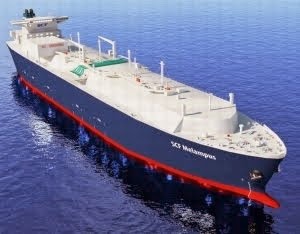
Crude Oil TankerTolfem Investments Limited is a leader in the of Nigerian Bonny Light Crude Oil (BLCO) sales market. As a privately held company, Tolfem Investments Ltd. is committed to and is focused on delivering reliable services to all her clients. Tolfem Investments Limited is determined to continue to grow in the energy sector and to become one of the recognized leaders in the Nigerian oil and gas industry.

Simplifying Nigerian Bonny Light Crude Oil Buying, BLCO

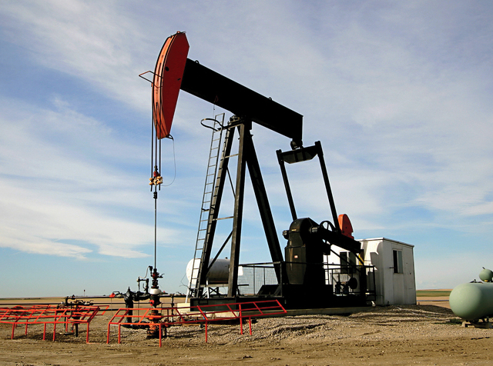
Crude Oil PumpTolfem Investments Ltd has an excellent track record of reliability in the supply of Bonny light crude oil, BLCO. We protect our buyers with 2% Performance Bond while we also expect protection from our customers with bank instrument from the world's top banks. We deliver on TTO, TTT, CIF and FOB basis.

If you wish to purchase Bonny Light Crude Oil from a reliable seller, contact us today to commence a comprehensive purchase procedure.

Crude Oil Tanker

Showing posts with label Proven Oil. Show all posts

Thursday, 29 May 2014

AGR wins NCS frame agreement with Premier Oil

AGR has been assigned by Premier Oil to deliver a range of services within the Norwegian Continental Shelf (NCS).


The contract period is for five years plus an additional three years. The scope of the agreement covers well management and well planning services for exploration drilling and field developments. The work scope will encompass delivery of resources, competence and methodology by AGR’s well management team in Norway.
 
Sjur Talstad, AGR’s E.V.P, Norway and Russia, said: “We are pleased to continue the close working relationship with Premier Oil on the Norwegian Continental Shelf (NCS). The activity will be carried out from our fast growing Stavanger office which has an excellent track record of delivering well management and operational HSE support."
 
AGR recently celebrated drilling over 500 well projects in 25 countries for 106 clients - an average of one drilling project commenced every 10 days since 2000. On the NCS, the company has managed over 80 drilling projects on 14 rigs on behalf of 21 operators. Last year, AGR’s Norway team was involved in 15% of exploration wells drilled on the NCS.


Providing useful resources, articles and writings on crude oil, other petroleum products, energy and gas. By Tolfem Investments Limited, online.

Tuesday, 20 May 2014

Proposed tax plan could pay oil dividends to California residents

Billionaire environmentalist Tom Steyer is lobbying for a new law in California that would force energy companies to share as much as $2 billion of the state’s oil wealth with residents.


The proceeds would come from an “extraction tax” -- fees producers would pay on their crude oil output. Similar taxes already exist in most major drilling states such as Texas and North Dakota, with California a longtime holdout.


The tax might be used to pay a dividend directly to California residents, such as the one paid to Alaskans from that state’s oil revenue, according to a proposal Steyer will unveil today in a town hall meeting in San Jose, California. It might also be used to fund savings accounts for newborns or middle class tax cuts. A 9.9% per barrel tax on California oil production would yield $1.5 billion to $2 billion annually, Steyer estimates.


The former hedge fund manager, who has pledged to raise and spend as much as $100 million on climate-related political advocacy this year, is focusing on drilling in California. Steyer’s campaign is poised to galvanize opposition to the oil industry as the state weighs the costs and benefits of accelerated drilling in the largest undeveloped crude formation in the U.S.


“We’re trying to do a grassroots campaign here,” Steyer said in an interview. “We’re trying to engage the people of California on this in a way that could make a difference.”


Steyer has been an active force in California politics, successfully backing a 2012 proposition to close a corporate tax loophole and a 2010 proposition that would have undercut state laws aimed at reducing greenhouse gas emissions.


His newest “Fair Shake” campaign includes a proposal to ban hydraulic fracturing unless two thirds of a county’s residents vote to approve it.


The energy industry has beaten back previous efforts to introduce a production tax in California, most notably in 2006 when a proposition backed by Hollywood producer Steve Bing was defeated by more than 700,000 votes.


That campaign was among the most expensive in state history, with both sides spending more than $140 million, according to the Institute of Governmental Studies at the University of California-Berkeley. Chevron Corp. spent more than $30 million to defeat the proposal.


“As the largest oil and gas producer headquartered in California, Chevron provides significant economic value to the state through taxes and royalties, investments and job creation,” said Kurt Glaubitz, a Chevron spokesman. “This proposal will hinder our state’s fragile economy, increase business and consumer costs and discourage job creation.”


California residents in some areas are showing increasing hostility to new drilling plans as companies such as Occidental Petroleum Corp. seek to tap the state’s vast Monterey shale. The formation, which stretches almost from Los Angeles to San Jose, may hold as many as 15 billion bbl of oil, according to a 2011 report from the U.S. Energy Information Administration.


The city of Carson and Santa Cruz County have temporarily halted drilling, and Los Angeles is weighing a similar proposal. More than 60 other communities in the state are considering such measures, according to CREDO, an activist group sponsoring and tracking petitions for moratoriums.


California Governor Jerry Brown, a Democrat, has introduced new regulations to govern the practice of fracing.


The town hall today in San Jose is meant to start a discussion on how funds from a potential extraction tax would be used, said Steyer, who spent millions last year through his political action committee NextGen Climate Action to oppose construction of the Keystone XL pipeline. Keystone XL, still awaiting U.S. approval, would carry crude from Canada’s oil sands to Gulf Coast refineries.


Steyer’s California campaign will first seek to push its initiatives through the state legislature. He declined to say whether he would consider a ballot proposition to force a statewide vote.


“When Californians have voted through elected representatives or direct democracy on this issue, they always reach the same conclusion,” said Tupper Hull, a spokesman for the Western States Petroleum Association in Sacramento. “It’s bad policy for the business climate in California, and bad policy for consumers.”


Thirty states have some form of an oil and gas production tax, including every major producer except California and Pennsylvania, according to the National Conference of State Legislatures. Texas uses its “severance” tax on production, which collected about $4.5 billion in revenue last year, to help fund public education.


Providing useful resources, articles and writings on crude oil, other petroleum products, energy and gas. By Tolfem Investments Limited, online.

Sunday, 18 May 2014

CEPSA acquires a 30% stake in an exploratory block in Liberia

CEPSA has acquired a 30% stake in a hydrocarbon exploration block off the Liberian coast in West Africa. Block LB-10 is operated by Anadarko Liberia Block 10 Company, a wholly-owned subsidiary of Anadarko Petroleum headquartered in The Woodlands, Texas.


The farmout agreement provides, in part, that CEPSA will participate in the drilling of two exploratory wells before August 2016. The block is in a deepwater area, with depths of approximately between 1,000 and 2,000 m. Anadarko has extensive experience as an operator in this basin. Other companies with participation in the block are the London-based company Liberia Japan Petroleum and Spanish integrated Repsol.


This acquisition has enabled CEPSA to add to its offshore portfolio, which already includes two exploratory blocks in Brazil and one in Suriname and exploration and production blocks in Thailand and Malaysia.


The operation is part of CEPSA' s expansion strategy in exploration and production. It will also be an opportunity to increase our technical capacities in the high potential offshore area in West Africa.


Providing useful resources, articles and writings on crude oil, other petroleum products, energy and gas. By Tolfem Investments Limited, online.

Friday, 16 May 2014

Emerson’s new ultrasonic flow meters improve accuracy

Emerson Process Management has introduced new Daniel multi-path gas and liquid ultrasonic meters that feature a next-generation electronics platform.


The accuracy, line size breadth, and flexibility make the new JuniorSonic one-path (3411) or two-path (3412), and SeniorSonic four-path (3414) gas ultrasonic meters ideal for a number of flow measurement applications. In addition, the new four-path (3814) liquid ultrasonic meter expands on the functionality and performance of its predecessor, the 3804 liquid ultrasonic meter, to offer improved reliability for custody transfer applications.


With faster flow sampling rates, the new electronics platform significantly increases the data set used to calculate average velocity, allowing rapid recognition of changing flow dynamics. Users will have access to high-volume data capture as well as detailed flow parameters, including pressure, temperature, and gas composition, allowing the meter to act as a redundant flow computer.


Improved calculations for auditing or invoice resolution are enabled by the electronics’ fast delivery of key data from the meter’s audit trail. The audit trail complies with American Petroleum Institute Standard 21.1, and is supported by a standard 128 MB non-volatile memory. Access to alarms, events and configuration changes is provided in a matter of seconds.


Additionally, the meters’ electronics feature a compact circuit board for increased reliability and maintainability, simplifying field removal and reinstallation. The electronics retrofit Daniel legacy ultrasonic meters and are expandable, enabling future upgrades to help meet changing customer needs. The electronics support remote access as well as true 100BaseT Fast Ethernet connectivity to facilitate enterprise-wide communication and integration.


To further improve reliability and uptime, each Daniel gas ultrasonic meter is supplied with new, rugged T-20 Series transducers that are engineered for wet, rich and/or dirty gas applications.  The transducers facilitate troubleshooting by enabling operators to quickly detect and isolate problems, preventing unnecessary depressurization of the meter.


The new Daniel gas and liquid ultrasonic meters are also equipped with an updated version of MeterLink (v1.10), a configuration and diagnostic software that utilizes an intuitive interface to improve overall functionality and ease of use.  MeterLink displays abnormal flow profiles, upstream blockage, deposit build-up within the meter, and the existence of liquid hydrocarbon in gas.


Providing useful resources, articles and writings on crude oil, other petroleum products, energy and gas. By Tolfem Investments Limited, online.

Wednesday, 7 May 2014

Natural gas continues to shrink America’s carbon footprint, API says

The U.S. Environmental Protection Agency’s (EPA) latest report shows that natural gas continues to help shrink America’s carbon footprint, said API spokesman Zachary Cikanek.


“America is leading the world in reducing greenhouse gasses thanks, in part, to the revolution in natural gas production,” said Cikanek. “This latest report shows that emissions dropped an additional 3.4% from 2011 to 2012, and emissions are down 10% since 2005.”


“Innovations in hydraulic fracturing and horizontal drilling have helped make the U.S. the largest producer of natural gas in the world, and these technologies are a great example of how we can grow the economy, create jobs, and protect the environment.”


Providing useful resources, articles and writings on crude oil, other petroleum products, energy and gas. By Tolfem Investments Limited, online.

Sunday, 4 May 2014

Chevron production heads for 8-year low as profit declines

Chevron is on track to post its lowest first quarter production in eight years after bad weather disrupted operations in Central Asia and North America.


Chevron by its market value also signaled that profit for the first three months of the year was the lowest since late 2010, according to a statement. Chevron, which is overseeing the $54 bn Gorgon natural gas export project in Australia, cited currency fluctuations and the falling value of some assets for the decline.


Chevron said it pumped the equivalent of 2.579 MMbpd during January and February. If output persisted at that pace through March, production for the full quarter would have been the lowest for that time of year since 2006.


Chevron is scheduled to disclose results for the entire three month period on May 2.


Before its statement, the company was expected to report full quarter output of 2.61 MMbbl, based on the average of three analysts’ estimates compiled by Bloomberg. That compares with 2.645 MMbbl in the first three months of 2013.


Chevron is accelerating oil exploration from Argentina to China to add reserves and revive output. Chairman and CEO John Watson is spending almost $40 bn this year to find, extract, transport and process oil and gas. Watson’s strategy also calls for auctioning off $10 bn in oilfields and other assets to hone the Chevron’s focus on the highest profit projects.


The statement was released after the close of regular trading in New York, where the shares fell 0.7% to $118.22.


Chevron declined 4.7% this year through the close, after advancing 16% in 2013. In March, Watson cut the company’s long-term production target by 6.1% to the equivalent of 3.1 MMbpd in 2017.


The company’s output fell for a third consecutive year in 2013, the longest streak of declines since the 2001-2004 period, according to data compiled by Bloomberg.


Exxon Mobil is the biggest energy company by market value, followed by Shell.


Providing useful resources, articles and writings on crude oil, other petroleum products, energy and gas. By Tolfem Investments Limited, online.

Saturday, 19 April 2014

Parex to focus on Colombia in bid to double production

Parex Resources Inc., the Canadian oil producer operating in Latin America, is focusing its growth efforts on Colombia as it aims to double production in the next five years.


CEO Wayne Foo is planning more land and asset acquisitions to boost the company’s output to as much as 50,000 bpd, he said in an interview at Parex’s headquarters in Calgary yesterday. Colombia’s stable government and well-understood oil resources make it a better investment than other countries in the region such as Argentina, Foo said.


“To be relevant in the market, you really have to be in the range of 25,000 to 50,000 barrels a day,” he said. Production will grow as much as 20% annually from 17,500 to 18,500 bpd this year, he said.


Parex began as an oil producer in Argentina in 2003. The Colombian business was spun off in 2009 and based in Calgary. One of about 10 Canadian energy producers operating in Colombia, Parex produces both light and medium crude in the Llanos basin.


Parex’s shares have more than doubled in the past 12 months, valuing the company at about C$1 billion ($911 million). The stock declined 2.1% yesterday, closing at C$9.50 in Toronto.


“They still have upside,” said John Stephenson, who helps oversee about C$3.1 billion at First Asset Investment Management Inc. in Toronto. “Historically they have been drilling targets that were small and they’re now going after bigger plays to add resource.”


The Canadian company has focused on purchasing land near its current holdings in the Llanos basin, boosting its position to about 2 million acres (809,371 hectares) from 250,000 acres in 2009.


Parex’s largest non-state-owned competitor is Pacific Rubiales Energy Co., a Bogota and Toronto-listed company with a market value of about C$6.7 billion. Colombia in February produced about 1 MMbpd of crude, according to the country’s Mines and Energy Ministry.


Oil transportation infrastructure has caught up with production, helping to relieve a bottleneck that existed for producers a couple of years ago, said Parex V.P. Mike Kruchten. Last year the Bicentenario line began operating, while the Ocensa pipeline has been expanded. Calgary-based Enbridge Inc. is also considering building a line to Colombia’s Pacific coast.


“At present there’s lots of excess capacity” in pipelines, said Foo.


Parex earns about 3% to 4% less on its Colombian oil than Brent crude, the global benchmark, said Kruchten. Brent crude for May settlement traded at about $106 a barrel on April 7.


Providing useful resources, articles and writings on crude oil, other petroleum products, energy and gas. By Tolfem Investments Limited, online.

Thursday, 17 April 2014

Oil India said to study purchase of Shell's Nigerian oil blocks

Oil India Ltd. is studying an acquisition of Nigerian oil and gas assets owned by Royal Dutch Shell Plc, according to people familiar with the matter.


Oil India is weighing a bid for stakes Shell holds in some onshore blocks, valued at as much as $2 billion, the people said. It will partner with India’s Sandesara Group on the potential purchase, according to the people, who asked not to be identified as the deliberations are private.


The explorer joins Dangote Group, controlled by Africa’s richest man, and Seplat Petroleum Development Co. in seeking to acquire Nigerian assets being sold by Western rivals. Shell and Chevron Corp. are divesting fields in the country amid persistent violence and crude theft in the oil-rich Niger River delta.


India’s government-run oil companies are building on their record $5.5 billion of acquisitions last year to secure supplies for Asia’s second-biggest energy consumer. Oil India, which had 124.9 billion rupees of cash at the end of September, has purchased stakes in gas fields in Mozambique and shale assets in the U.S. over the past two years.


Oil India Chairman S.K. Srivastava and finance director Rupshikha Saikia Borah didn’t answer two calls each to their mobile phones seeking comment. Sandesara Group Chairman Nitin Sandesara didn’t immediately respond to an email and phone call to his office.


Sterling Energy & Exploration Production Ltd., a unit of Sandesara Group, has more than 250 MMbbl of certified oil reserves and 1 Tcf of natural gas reserves in the Niger Delta, according to its website. Nigeria pumped about 2.1 MMbpd last month, data compiled by Bloomberg show.


Shell said in October divestments in India have been deferred to 2014. The Anglo-Dutch company’s earnings in the country were curbed by almost $1 billion last year because of oil theft and a LNG export blockade by the government, CFO Simon Henry said March 13.


Earlier this year, Oil & Natural Gas Corp. and Oil India paid $2.5 billion for a 10% stake in a Mozambique natural gas field. Securing fuel supplies is crucial for Prime Minister Manmohan Singh as India relies on imports to meet about three-quarters of its oil requirements.


Seplat Petroleum, based in Lagos, and its partners are bidding for two Nigerian oil and gas permits Shell is selling, Chairman A.B.C. Orjiako said March 11. Dangote Group is in talks to purchase onshore oil blocks in the country as international companies sell assets, Group Executive Director said in January.


Providing useful resources, articles and writings on crude oil, other petroleum products, energy and gas. By Tolfem Investments Limited, online.

Crude Oil Tankers