Tolfem Investments Limited


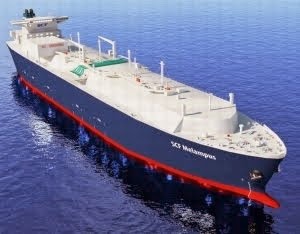
Crude Oil TankerTolfem Investments Limited is a leader in the of Nigerian Bonny Light Crude Oil (BLCO) sales market. As a privately held company, Tolfem Investments Ltd. is committed to and is focused on delivering reliable services to all her clients. Tolfem Investments Limited is determined to continue to grow in the energy sector and to become one of the recognized leaders in the Nigerian oil and gas industry.
Simplifying Nigerian Bonny Light Crude Oil Buying, BLCO

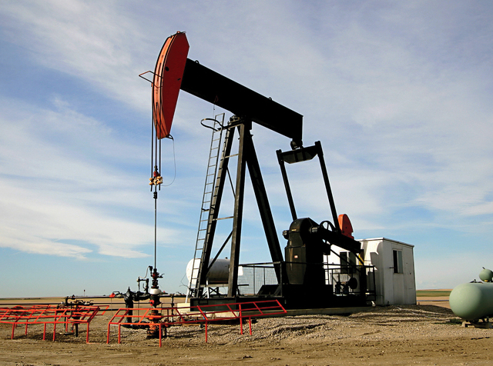
Crude Oil PumpTolfem Investments Ltd has an excellent track record of reliability in the supply of Bonny light crude oil, BLCO. We protect our buyers with 2% Performance Bond while we also expect protection from our customers with bank instrument from the world's top banks. We deliver on TTO, TTT, CIF and FOB basis.

If you wish to purchase Bonny Light Crude Oil from a reliable seller, contact us today to commence a comprehensive purchase procedure.

Crude Oil Tanker

Showing posts with label Oil Trading Business. Show all posts

Tuesday, 3 June 2014

Norway brings foreign minister home amid Ukrainian crisis, scraps Houston appearance

The worsening political and military situation in Ukraine is having far-reaching effects. As Ukrainian and pro-Russian protestors clashed over the weekend in eastern Ukraine, Norway felt compelled to bring home Foreign Minister BØrge Brende for consultations with other Western European countries about potential natural gas supply ramifications. Brende’s abrupt return to Europe also forced postponement of a long-awaited appearance Monday at Rice University’s Baker Institute, where he had been scheduled to discuss global energy challenges and opportunities, particularly for oil and natural gas, from Norway’s perspective.


Norway’s ambassador to the U.S., Kåre R. Aas, confirmed to a media briefing at the Baker Institute Monday morning that the situation in Ukraine had forced Brende to forgo his Houston visit, to return to Europe. Ambassador Aas and other Norwegian officials emphasized that while the path that the Ukrainian crisis will take over the next week is very difficult to predict, they believe that the situation ultimately requires a political solution. They pointed to Sunday’s emergency meeting of the U.N. Security Council as an important starting point in resolving the conflict. In the meantime, Norway is meeting with its NATO allies to consider what further measures, if any, should be taken to force the Russians to back down from their meddling in eastern Ukraine.


There is great concern about the short- and medium-term stability of natural gas imports coming into Western Europe from Russia, said the Norwegian officials. About one-third of European gas imports come from Norway, while roughly another third is sourced from Russia. What concerns the European countries is that half of that Russian gas has to transit pipelines that run through Ukraine. This means that 15% of Europe’s overall gas supply is directly threatened by the instability in Ukraine, which is an improvement over what could have been the proportion a few years ago. New Gazprom pipelines built via Belarus and the Baltic Sea to Germany have cut the volume of European gas imports transiting Ukraine from about 30% to 15%. Nevertheless, any significant disruption in gas supplies could threaten the fragile Western European economy.


For its part, Norway is producing 1.7 million bpd of liquids and 105 Bcm/year of natural gas. While officials confirmed that up to 70% of discovered and projected natural gas reserves in Norway have yet to be developed and put into production, adding significant capacity to the country’s gas output and exports is not a short-term proposition. Therefore, the ability to offset any Russian gas export shortfall in the short term is very small.


Ambassador Aas confirmed that Foreign Minister Brende remains committed to maintaining the special relationship between Norway and Houston, and that he will reschedule an appearance at the Baker Institute later this year.


Providing useful resources, articles and writings on crude oil, other petroleum products, energy and gas. By Tolfem Investments Limited, online.

Sunday, 1 June 2014

AWE provides Pateke-4H drilling update

AWE reported that the Pateke-4H development well, including the sidetrack section, was at a measured depth of 4,083 m with the 9 5/8 in. casing successfully installed and cemented to a depth of 3,669 m. Preparations are under way for the drilling of the next interval using an 8 ½ in. drilling assembly to drill horizontally through the reservoir section to a planned measured depth of 5,361 m.
 
The Kapuni F10 sandstone objective has already been intersected on prognosis with oil shows and real time logging measurements indicating the likely presence of an oil bearing reservoir. The commercial significance of the oil shows will not be clear until the horizontal drilling is completed and the reservoir size and quality is fully assessed.
 
The Pateke-4H development well is in PMP 38158 and AWE is the operator. Located in the offshore Taranaki basin, New Zealand, PMP 38158 contains the Tui, Amokura and Pateke fields and has been producing since 2007.
 
Pateke-4H is targeting a mapped northern extension of the currently producing Pateke field. The well is being drilled in water depth of approximately 124 m with a planned total measured depth of 5,361 m, including a 1,272 m horizontal section. If successful, the well will be completed for subsequent tie-back to the Tui FPSO (Umuroa) for production in 2015.


Providing useful resources, articles and writings on crude oil, other petroleum products, energy and gas. By Tolfem Investments Limited, online.

Saturday, 31 May 2014

Husky Energy to test carbon-capture tech at heavy-oil site

Husky Energy Inc. has agreed to partner with CO2 Solutions Inc. on a carbon-capture technology pilot at a heavy-oil site in Canada.


The test project, to be operated by CO2 Solutions at Husky’s Pikes Peak South site in Saskatchewan, is expected to start early next year and wrap up by the third quarter of 2015, Quebec City-based CO2 said today in a statement.


Husky may use the new technology for commercial carbon-capture projects depending on the results, according to the statement.


Providing useful resources, articles and writings on crude oil, other petroleum products, energy and gas. By Tolfem Investments Limited, online.

Friday, 16 May 2014

Emerson’s new ultrasonic flow meters improve accuracy

Emerson Process Management has introduced new Daniel multi-path gas and liquid ultrasonic meters that feature a next-generation electronics platform.


The accuracy, line size breadth, and flexibility make the new JuniorSonic one-path (3411) or two-path (3412), and SeniorSonic four-path (3414) gas ultrasonic meters ideal for a number of flow measurement applications. In addition, the new four-path (3814) liquid ultrasonic meter expands on the functionality and performance of its predecessor, the 3804 liquid ultrasonic meter, to offer improved reliability for custody transfer applications.


With faster flow sampling rates, the new electronics platform significantly increases the data set used to calculate average velocity, allowing rapid recognition of changing flow dynamics. Users will have access to high-volume data capture as well as detailed flow parameters, including pressure, temperature, and gas composition, allowing the meter to act as a redundant flow computer.


Improved calculations for auditing or invoice resolution are enabled by the electronics’ fast delivery of key data from the meter’s audit trail. The audit trail complies with American Petroleum Institute Standard 21.1, and is supported by a standard 128 MB non-volatile memory. Access to alarms, events and configuration changes is provided in a matter of seconds.


Additionally, the meters’ electronics feature a compact circuit board for increased reliability and maintainability, simplifying field removal and reinstallation. The electronics retrofit Daniel legacy ultrasonic meters and are expandable, enabling future upgrades to help meet changing customer needs. The electronics support remote access as well as true 100BaseT Fast Ethernet connectivity to facilitate enterprise-wide communication and integration.


To further improve reliability and uptime, each Daniel gas ultrasonic meter is supplied with new, rugged T-20 Series transducers that are engineered for wet, rich and/or dirty gas applications.  The transducers facilitate troubleshooting by enabling operators to quickly detect and isolate problems, preventing unnecessary depressurization of the meter.


The new Daniel gas and liquid ultrasonic meters are also equipped with an updated version of MeterLink (v1.10), a configuration and diagnostic software that utilizes an intuitive interface to improve overall functionality and ease of use.  MeterLink displays abnormal flow profiles, upstream blockage, deposit build-up within the meter, and the existence of liquid hydrocarbon in gas.


Providing useful resources, articles and writings on crude oil, other petroleum products, energy and gas. By Tolfem Investments Limited, online.

Wednesday, 14 May 2014

Jimmy Carter announces opposition to Keystone

Former President Jimmy Carter has announced his opposition to the Keystone XL pipeline, calling it a “linchpin for tar sands expansion and the increased pollution that will follow.”


Carter joined nine other Nobel laureates -- including anti-apartheid activist Archbishop Desmond Tutu -- in signing a letter urging President Barack Obama and Secretary of State John Kerry to reject the $5.4 bn link between Canadian heavy crude and U.S. Gulf Coast refineries.


“Not only is Carter a former president, but he is a former president whose visionary energy policies have proved prescient in recent years,” Anthony Swift, an international attorney at the Natural Resources Defense Council, said in a statement.


The Nobel laureates’ open letter was published today in Politico, a Washington-based publication, as a final decision on the project that’s been under review for five years may be near. Eight federal agencies, including the Environmental Protection Agency, have until May 1 to submit comments to the U.S. State Department, which is reviewing the project because it would cross the U.S. border.


There’s no timeline for a final decision, which Obama, also Nobel Peace Prize winner, has said he will make after the State Department completes its review.


The NRDC, the Sierra Club, the Nobel Women’s Initiative and Environmental Defence, a Canadian environmental group, sponsored the ad with the letter. Critics say the pipeline will worsen climate change by promoting development of Alberta’s oil sands, which release more carbon dioxide than other forms of crude oil. Supporters say the oil will find it’s way to market even without the pipeline, which will provide construction jobs.


Susan Casey-Lefkowitz, director of the NRDC’s international program, said the letter reflects the “ethical and moral” nature of the Keystone XL debate.


As the administration weighs the project, the factions fighting over it have sought to marshal current and former politicians, foreign dignitaries, scientists and celebrities to their cause.


Larry Noble, a counsel at the Campaign Legal Center, a Washington-based group that monitors campaign finance and other political issues, said gaining support from well-known people can help generate public concern.


It’s particularly important for Keystone opponents to do so because they can’t match the spending the oil and gas industry can make in support of the project, he said.


“If you don’t do it and it’s a close vote, then you’re concerned you didn’t pull out all the stops,” Noble said in a phone interview. “Those names will get someone to read something they might not have otherwise read.”


Supporters play the game too. The American Petroleum Institute has said in advertisements that former presidents George W. Bush, a Republican, and Bill Clinton, a Democrat, support the piepline.


R.C. Hammond, a spokesman for the Consumer Energy Alliance, an industry group whose members include Exxon Mobil Corp., said said in an email that investors Warren Buffett and T. Boone Pickens also favor Keystone, as does action star Chuck Norris.


Critics can point to actors Robert Redford, Daryl Hannah, and Jared Leto as allies. Last week NRDC released a list of 100 scientists and engineers urging Obama to reject the project.


Swift, of the NRDC, said Carter carries special weight because of his advocacy for energy innovation during his 1977-80 presidency, which included putting solar panels on the White House roof.


The State Department is reviewing whether Keystone is in the national interest, weighing factors including its environmental, economic and diplomatic impacts.


Providing useful resources, articles and writings on crude oil, other petroleum products, energy and gas. By Tolfem Investments Limited, online.

Tuesday, 29 April 2014

Natural gas futures drop as milder U.S. weather cuts fuel demand

Natural gas fell for a second day in New York on speculation that stockpiling may accelerate as milder weather reduces fuel use.


Gas dropped 1.3% as MDA Weather Services predicted seasonal or higher temperatures for most of the lower 48 states from April 19 through April 28. Prices jumped to a one-month high previous week after a government report showed that U.S. inventories rose by less than half the normal rate. Frigid weather this year sent supplies to an 11-year low in March.


“Most thermostats have been turned off or down and natural gas usage is starting to fall off in terms of heating,” said Ellen Stamm, global natural gas analyst at Schneider Electric in Louisville, Kentucky. “This week people are anticipating a larger injection. That is lending downside potential.”


Natural gas for May delivery fell 6 cents to $4.56 per MMBtu on the New York Mercantile Exchange, the lowest settlement since April 8. Volume for all futures traded was 49% below the 100-day average. Gas has gained 7.8% this year.


Unusually cold air from the Great Plains through the East Coast over the next five days will subsequently ease for the rest of the month, said MDA in Gaithersburg, Maryland.


The high in Manhattan on April 16 will drop to 51 degrees Fahrenheit, 11 below normal, before climbing a week later to 68 degrees, 4 above average, according to AccuWeather in State College, Pennsylvania.


About 49% of U.S. households use gas for heating, while power plants account for 31% of gas demand, according to the U.S. Energy Information Administration, the Energy Department’s statistical arm. Gas consumption slumps after the heating season ends and before hotter weather drives air-conditioning needs.


Inventories rose by 4 Bcf in the week ended April 4 to 826 bn, below the five-year average gain of 9 bn for the period, EIA data show. Stockpiles were at an 11-year low in the previous seven days.


Tapering heating demand means stockpile gains probably accelerated to 20 Bcf last week, Stamm said. Tim Evans, an energy analyst at Citi Futures in New York, estimated an increase gain of 36 bn, according to an April 11 note to clients. The five-year average increase for period is 37 bn.


The EIA’s next weekly stockpile report is scheduled for release on April 17.


Record gas production will help boost stockpiles to 3.422 Tcf by the end of October, which would be the lowest level before the start of the peak heating demand season since 2008, according to the EIA’s April 8 Short-Term Energy Outlook. The increase means a record 2.6 Tcf of gas will flow into storage, toppling the 2001 injection rate of 2.402 tn.


Under normal summer weather, increased shipments from the Marcellus shale deposit in the Northeast “should be sufficient” to rebuild supplies for next winter without significant new gas drilling, Jeffrey Currie, an analyst with Goldman Sachs Group, said in a note to clients dated 13 April, 2014. The bank’s three-month forecast for gas prices is $4.50 per MMBtu.


The current “uninspiring price environment” at a time when the gas industry is focused on being financially conservative has kept even more pure gas plays on the sidelines, Currie said. “As a result, a hot summer would likely trigger a strong increase in U.S. natural gas prices.” It would take a move up to $5.75 to $6.50 in gas prices to draw rigs away from oil drilling in the current crude environment of $100 a bbl, he said.


Output from the Marcellus shale will average 14.773 Bcf a day in May, up from 14.52 bn in April, the EIA said in its monthly Drilling Productivity Report.


The government estimates that total U.S. marketed gas production will expand for the ninth straight year, rising to a record 72.29 Bcf a day.


Providing useful resources, articles and writings on crude oil, other petroleum products, energy and gas. By Tolfem Investments Limited, online.

Crude Oil Tankers