Tolfem Investments Limited


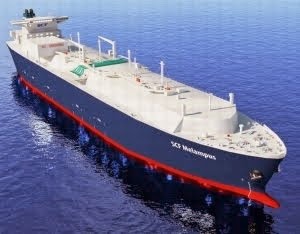
Crude Oil TankerTolfem Investments Limited is a leader in the of Nigerian Bonny Light Crude Oil (BLCO) sales market. As a privately held company, Tolfem Investments Ltd. is committed to and is focused on delivering reliable services to all her clients. Tolfem Investments Limited is determined to continue to grow in the energy sector and to become one of the recognized leaders in the Nigerian oil and gas industry.
Simplifying Nigerian Bonny Light Crude Oil Buying, BLCO

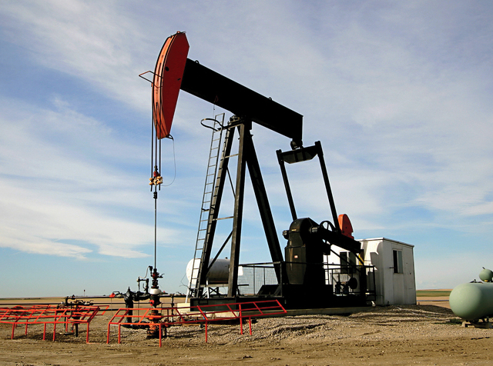
Crude Oil PumpTolfem Investments Ltd has an excellent track record of reliability in the supply of Bonny light crude oil, BLCO. We protect our buyers with 2% Performance Bond while we also expect protection from our customers with bank instrument from the world's top banks. We deliver on TTO, TTT, CIF and FOB basis.

If you wish to purchase Bonny Light Crude Oil from a reliable seller, contact us today to commence a comprehensive purchase procedure.

Crude Oil Tanker

Showing posts with label Bonny Light Crude Oil. Show all posts

Tuesday, 27 May 2014

Iran oil shipments highest since sanctions began, IEA says

Iran’s crude shipments in February were the highest since the imposition of sanctions and more than a limit agreed with Western powers in an interim nuclear deal, according to the International Energy Agency.


The country shipped 1.65 MMbpd to importing countries in February, the highest level since June 2012, the IEA said. March shipments, estimated to have fallen to 1.05 MMbpd, “will likely be revised upwards closer to February levels upon receipt of more complete data,” the IEA said.


“Imports of Iranian oil are running well above 2013 levels for the third consecutive month” and could remain high in April, the Paris-based adviser to 28 nations said in its monthly oil market report. Under the interim nuclear deal agreed in November, “Iran’s exports are supposed to be held at an average 1 MMbpd for the six months to end-July,” it said.


Iranian oil production plunged by 1 MMbpd, or 28%, from 2011 to 2013 after the U.S. and European Union banned imports of oil from the country and imposed financial sanctions. An interim accord easing restrictions on insurance for Iran’s oil shipments and freeing up cash held outside the country went into effect in January, in return for a suspension of some parts of the country’s nuclear program.


Crude shipments from Iran will probably average above 1.2 MMbpd over the six month period of sanctions relief, Richard Mallinson, geopolitical analyst at Energy Aspects, said by phone today from London.


Keeping production at the level of the last couple of months “will have a real knock-on effect in the diplomacy,” Mallinson said. “I don’t think it’s too late yet for Iran to moderate that short-term behavior, in order to rebuild some confidence in the talks and as they progress towards a final deal.”


Officials from Iran, the U.S., UK, France, Germany, China, Russia and the EU met in Vienna this week. “A lot of intensive work will be needed to overcome the differences,” between the two sides before a final July deadline for a nuclear deal, EU foreign policy chief Catherine Ashton said as talks ended April 9. Diplomats will meet again on May 13 for talks.


The IEA revised upward February import volumes of Iranian crude by 240,000 bpd after it gathered more complete data. China, India, and South Korea all imported more Iranian oil than originally estimated in last month’s report, the IEA said. The agency counts cargoes once they are received in importing countries.


Buyers permitted to import Iranian crude under U.S. sanctions are Turkey, China, Japan, India, South Korea and Taiwan. In March importers of Iranian oil expanded to include Albania and Syria, the IEA said. February data for Chinese, Indian and Korean imports were revised upwards by 168,000, 93,000 and 83,000 bpd respectively. Japanese data was revised down by 103,000 bpd.


Iranian crude stored on tankers fell from 32 MMbbl at the end of February to 22 MMbbl at the end of March, the agency said citing data from E.A. Gibson Shipbrokers.


Providing useful resources, articles and writings on crude oil, other petroleum products, energy and gas. By Tolfem Investments Limited, online.

Monday, 26 May 2014

Emerson invests $60 million in new flow measurement facility

Emerson Process Management is expanding the company’s existing manufacturing and engineering services campus in Cluj-Napoca, Romania.


The expansion includes a new, 18,800-sq-m flow measurement manufacturing building. This $60-million investment will help meet growing demand for the company’s flow measurement products and services in Europe and other regions.


Additionally, in the summer of 2014, Emerson Process Management moves into a separate, newly constructed $16-million facility on the Cluj campus that will be home to the Regional Project Engineering Center and the European System Integration Center for its PlantWeb Solutions Group. This facility will house up to 600 employees who provide engineering and support services for European control systems and automation projects, plus an initial 100 additional personnel to assemble and test control systems for projects throughout Europe.


The new flow technology manufacturing building will offer calibration, services, and customer training facilities for Emerson Process Management’s Micro Motion, Rosemount, and Roxar flow measurement technologies. This facility will provide modern and spacious production capabilities as well as offices for engineering and customer support services, and fulfill market demands for quality and traceable calibration.
 
In addition, a state-of-the-art customer experience center is planned that will incorporate training and meeting facilities, along with displays of Emerson technologies.  The new facility adds to Emerson’s current European network of facilities, which includes an existing flow manufacturing and service center in Ede, the Netherlands.


“These additional capabilities increase our flexibility and ability to manage our European customers’ most challenging needs,” said Sonnenberg.


The company’s Cluj-Napoca campus currently manufactures Fisher pressure regulators, Roxar flow metering and flow assurance products, Rosemount Analytical products, Leroy-Somer power generators, Control Techniques electrical equipment for photovoltaic power plants, RIDGID tools, and Appleton A.T.X. lighting fixtures and junction boxes for hazardous and adverse environments.


Providing useful resources, articles and writings on crude oil, other petroleum products, energy and gas. By Tolfem Investments Limited, online.

Friday, 23 May 2014

ConocoPhillips raises Eagle Ford resource estimate

ConocoPhillips has reaffirmed its objective to deliver double-digit returns annually to shareholders at its Analyst Meeting held at the New York Stock Exchange. Members of the company’s executive leadership team outlined ConocoPhillips’ goal to consistently deliver 3 to 5% compound annual growth in production and margins.
 
ConocoPhillips also highlighted its substantial U.S. unconventional position and announced an increase of its estimated resource base in the prolific Eagle Ford play. Based on its prime acreage position and technical knowledge, the company has increased its estimates from 1.8 billion to 2.5 billion bbl of oil in place. Production is also expected to increase from current volumes to more than 250,000 boed by 2017.
 
“ConocoPhillips’ wells in the Eagle Ford have the highest oil rates per well and are leading the industry in value. This is attributable not only to the fact that we are in the best part of the play, but also to our relentless focus on  technical innovation and drilling and completion cost efficiencies,” said Chairman and CEO Ryan Lance. “We are applying these benefits and efficiencies across our unconventional portfolio in the Bakken, Permian, Niobrara, Canada, and outside of North America. We believe our unconventional resource base is unmatched, particularly for a company our size."
 
“Beginning this year, we will be growing production and margins across our diverse asset base, and allocating 95% of our annual capital expenditures to growth projects and programs with margins that are higher than our average margin today. We believe we have the asset base, technical capability, world-class workforce and financial strength to deliver on our unique value proposition,” Lance added.
 
Since 2009, ConocoPhillips has added 6.7 billion boe of resources through a diverse and balanced exploration and appraisal portfolio of high-value opportunities. Among the high-quality prospects are four large U.S. Gulf of Mexico discoveries – Tiber, Gila, Shenandoah and Coronado. Further activity is targeting offshore prospects in Australia, Angola and Senegal; conventional exploration in Norway and Indonesia; and unconventional exploration in North America, Poland and Colombia.
 
In its first two years as an E&P company, ConocoPhillips generated proceeds of $12.4 billion from non-core asset sales, advanced new growth projects, achieved visible margin growth, accessed new organic growth opportunities, participated in successful deepwater Gulf of Mexico discoveries and maintained a strong dividend.
 
Over the next several years, ConocoPhillips plans to execute a disciplined capital program of approximately $16 billion per year and achieve the company’s organic reserve replacement target of more than 100%. The company expects to generate 3 to 5% compound annual production growth and margin growth from major development programs and projects already under way in the U.S. Lower 48, Canadian oil sands, UK and Norwegian North Sea, Malaysia and Australia.


Providing useful resources, articles and writings on crude oil, other petroleum products, energy and gas. By Tolfem Investments Limited, online.

Tuesday, 13 May 2014

Chevron, YPF continue development of Argentina's Vaca Muerta shale

Chevron Corporation has confirmed that subsidiaries of the company have signed agreements with the Argentine oil company YPF S.A. to continue development of shale oil and gas resources from the Vaca Muerta formation located in the Neuquén province in Argentina.


"This is a significant step in our subsidiaries' joint efforts with YPF to develop one of the most exciting shale plays in the world today," said George Kirkland, vice chairman of Chevron Corporation. "Vaca Muerta could become an important contributor to Chevron' s long term production growth."
 
The agreements build off the progress made with the drilling program begun in 2013 and call for continued investment toward large-scale drilling and production in the 96,000-acre (388-sq km) Loma Campana concession. The agreements also call for exploration of shale oil and gas resources in the 49,400-acre (200-sq km) Narambuena area located about 70 mi (100 km) north of Loma Campana in the Chihuido de la Sierra Negra concession, one of the main producing areas in the Neuquén basin of west-central Argentina.


"YPF is a reliable partner and operator that is advancing the project in the right direction," said Ali Moshiri, president of Chevron Africa and Latin America Exploration and Production Company. "We are pleased with the progress achieved so far and look forward to continuing to provide our technical expertise and investment to help Argentina achieve its goal of energy self-sufficiency."


Providing useful resources, articles and writings on crude oil, other petroleum products, energy and gas. By Tolfem Investments Limited, online.

Saturday, 10 May 2014

Gazprom Neft selects contractor for Badra oil field

Gazprom Neft, operator of the Badra oilfield development project, has appointed a contractor to lay the pipeline connecting the field to the power station in Zubaidiah, Wasit Province. The tender was won by Pakistani company Techno Engineering Services (Pvt.) Ltd.


In line with the contract, Techno Engineering Services will produce the designs, supply the equipment and materials, and carry out construction of the pipeline. The pipeline - which will be nearly 100-km long and have a daily capacity of 4.4 million cubic meters (circa 1.6 Bcm per year) - is scheduled to begin operations in 2015.


Under Gazprom Neft’s contract with the Iraqi government for the development of the Badra oil field, investors are to be compensated for costs related to infrastructure construction.


Gas supply from the Badra oil field will enhance the Zubaidiah power station’s daily power output and provide a 24-hour power supply to the city of Kut, which currently has electricity supplied for only 16 hours per day. Some of the extracted gas will be used to provide electricity to the Badra oil fields themselves.


In March, Gazprom Neft completed testing on a second well at Badra. The laying and testing of the oil pipeline to the Gharraf oilfield was completed in February, connecting the section to Iraq’s main pipeline system. The construction of the first phase of a central gathering station point with a capacity of 60,000 bpd is nearing completion. Work has also started on a gas treatment plant with the capacity to process 1.5 Bcm per year.


Providing useful resources, articles and writings on crude oil, other petroleum products, energy and gas. By Tolfem Investments Limited, online.

Friday, 9 May 2014

Houlder opens Houston engineering base

UK-based engineering group Houlder has launched a new venture to support clients headquartered in the U.S. Houlder Americas Inc. opened its San Felipe Plaza location earlier this year, and is already undertaking work for clients, including Ensco and Schlumberger.


The business group is employing local engineers to work alongside the small team that has relocated from the UK, led by Garry Kennie, president of Houlder Americas Inc. Kennie previously led Houlder’s offshore project and engineering business in Aberdeen.


The company provides wholly independent design and analysis, engineering and innovation, and project management services, varying from leading semisubmersible rig upgrades and vessel conversions, to supplying new deck equipment and handling systems.


Providing useful resources, articles and writings on crude oil, other petroleum products, energy and gas. By Tolfem Investments Limited, online.

Sunday, 4 May 2014

Chevron production heads for 8-year low as profit declines

Chevron is on track to post its lowest first quarter production in eight years after bad weather disrupted operations in Central Asia and North America.


Chevron by its market value also signaled that profit for the first three months of the year was the lowest since late 2010, according to a statement. Chevron, which is overseeing the $54 bn Gorgon natural gas export project in Australia, cited currency fluctuations and the falling value of some assets for the decline.


Chevron said it pumped the equivalent of 2.579 MMbpd during January and February. If output persisted at that pace through March, production for the full quarter would have been the lowest for that time of year since 2006.


Chevron is scheduled to disclose results for the entire three month period on May 2.


Before its statement, the company was expected to report full quarter output of 2.61 MMbbl, based on the average of three analysts’ estimates compiled by Bloomberg. That compares with 2.645 MMbbl in the first three months of 2013.


Chevron is accelerating oil exploration from Argentina to China to add reserves and revive output. Chairman and CEO John Watson is spending almost $40 bn this year to find, extract, transport and process oil and gas. Watson’s strategy also calls for auctioning off $10 bn in oilfields and other assets to hone the Chevron’s focus on the highest profit projects.


The statement was released after the close of regular trading in New York, where the shares fell 0.7% to $118.22.


Chevron declined 4.7% this year through the close, after advancing 16% in 2013. In March, Watson cut the company’s long-term production target by 6.1% to the equivalent of 3.1 MMbpd in 2017.


The company’s output fell for a third consecutive year in 2013, the longest streak of declines since the 2001-2004 period, according to data compiled by Bloomberg.


Exxon Mobil is the biggest energy company by market value, followed by Shell.


Providing useful resources, articles and writings on crude oil, other petroleum products, energy and gas. By Tolfem Investments Limited, online.

Tuesday, 29 April 2014

Natural gas futures drop as milder U.S. weather cuts fuel demand

Natural gas fell for a second day in New York on speculation that stockpiling may accelerate as milder weather reduces fuel use.


Gas dropped 1.3% as MDA Weather Services predicted seasonal or higher temperatures for most of the lower 48 states from April 19 through April 28. Prices jumped to a one-month high previous week after a government report showed that U.S. inventories rose by less than half the normal rate. Frigid weather this year sent supplies to an 11-year low in March.


“Most thermostats have been turned off or down and natural gas usage is starting to fall off in terms of heating,” said Ellen Stamm, global natural gas analyst at Schneider Electric in Louisville, Kentucky. “This week people are anticipating a larger injection. That is lending downside potential.”


Natural gas for May delivery fell 6 cents to $4.56 per MMBtu on the New York Mercantile Exchange, the lowest settlement since April 8. Volume for all futures traded was 49% below the 100-day average. Gas has gained 7.8% this year.


Unusually cold air from the Great Plains through the East Coast over the next five days will subsequently ease for the rest of the month, said MDA in Gaithersburg, Maryland.


The high in Manhattan on April 16 will drop to 51 degrees Fahrenheit, 11 below normal, before climbing a week later to 68 degrees, 4 above average, according to AccuWeather in State College, Pennsylvania.


About 49% of U.S. households use gas for heating, while power plants account for 31% of gas demand, according to the U.S. Energy Information Administration, the Energy Department’s statistical arm. Gas consumption slumps after the heating season ends and before hotter weather drives air-conditioning needs.


Inventories rose by 4 Bcf in the week ended April 4 to 826 bn, below the five-year average gain of 9 bn for the period, EIA data show. Stockpiles were at an 11-year low in the previous seven days.


Tapering heating demand means stockpile gains probably accelerated to 20 Bcf last week, Stamm said. Tim Evans, an energy analyst at Citi Futures in New York, estimated an increase gain of 36 bn, according to an April 11 note to clients. The five-year average increase for period is 37 bn.


The EIA’s next weekly stockpile report is scheduled for release on April 17.


Record gas production will help boost stockpiles to 3.422 Tcf by the end of October, which would be the lowest level before the start of the peak heating demand season since 2008, according to the EIA’s April 8 Short-Term Energy Outlook. The increase means a record 2.6 Tcf of gas will flow into storage, toppling the 2001 injection rate of 2.402 tn.


Under normal summer weather, increased shipments from the Marcellus shale deposit in the Northeast “should be sufficient” to rebuild supplies for next winter without significant new gas drilling, Jeffrey Currie, an analyst with Goldman Sachs Group, said in a note to clients dated 13 April, 2014. The bank’s three-month forecast for gas prices is $4.50 per MMBtu.


The current “uninspiring price environment” at a time when the gas industry is focused on being financially conservative has kept even more pure gas plays on the sidelines, Currie said. “As a result, a hot summer would likely trigger a strong increase in U.S. natural gas prices.” It would take a move up to $5.75 to $6.50 in gas prices to draw rigs away from oil drilling in the current crude environment of $100 a bbl, he said.


Output from the Marcellus shale will average 14.773 Bcf a day in May, up from 14.52 bn in April, the EIA said in its monthly Drilling Productivity Report.


The government estimates that total U.S. marketed gas production will expand for the ninth straight year, rising to a record 72.29 Bcf a day.


Providing useful resources, articles and writings on crude oil, other petroleum products, energy and gas. By Tolfem Investments Limited, online.

Saturday, 26 April 2014

First tanker starts loading crude from East Libya

An oil tanker started loading crude at Libya’s eastern port of Hariga as the region exports oil for the first time since July after civil unrest decimated the North African country’s production and shipments.


The Aegean Dignity started to load Hariga terminal at 11 a.m. local time, Mohamed Elharari, spokesman for state-run National Oil Corp., said by phone today. The operation will take about 24 hours. The shipment is for Italy, according to a statement from NOC subsidiary Arabian Gulf Oil.


“This is the first loading in around nine months from any of the rebel-controlled ports in the east and the first concrete positive from the deals announced just over a week ago,” Richard Mallinson, Energy Aspects analyst in London, said by phone yesterday. “But it is worth remembering that the market is only taking this as a very limited positive development” because other terminals remain shut.


Libya, the holder of Africa’s largest crude reserves, has dropped to the smallest producer among the Organization of Petroleum Exporting Countries as unrest deepened since the ouster of Muammar Qaddafi three years ago. The nation, which pumped close to 1.6 MMbpd until the start of 2011, is now producing 200,000 bpd, Elharari said April 14.


Rebels seeking a share in oil revenue for their region took control of four of Libya’s nine oil ports in July. The central government reached an agreement with some rebels earlier this month to open Hariga and Zueitina oil terminals, which have combined capacity of 180,000 bpd.


Es Sider, Libya’s largest terminal, and Ras Lanuf are still shut. State-run National Oil is in the process of lifting force majeure on Zueitina, Oil Ministry Measurement Director Ibrahim Al Awami said April 10, referring to the legal step that protects companies from liability when operations are disrupted for reasons beyond their control.


Vienna-based oil company OMV AG booked the Aegean Dignity tanker to load a cargo of Sarir crude from Hariga between April 15 and 16, two traders said on April 11, asking not to be identified because the matter isn’t public.


Providing useful resources, articles and writings on crude oil, other petroleum products, energy and gas. By Tolfem Investments Limited, online.

Thursday, 24 April 2014

OMV to invest $550 million in Lower Austria

OMV is consolidating its commitment to oil and gas production in Lower Austria. The Weinviertel region is the third most important production site in the company’s global portfolio after the exploration and production areas in Romania and Norway.


In line with the corporate strategy, OMV has invested heavily in exploration and production in Lower Austria. Investment in Lower Austria is set to rise to around $550 million (EUR 400 million) in the next two years.
Until 2016 around 80% of OMV’s total investment of around EUR 3.9 bn worldwide will go on exploration and production.


OMV CEO Gerhard Roiss: "Anyone striving for international growth needs to have a strong foundation. For us this foundation is Lower Austria. This investment in exploration and production underlines the importance of this region in the OMV portfolio."


"We took the decision on these investments in Lower Austria last year. Resources are needed in order to counter the natural depletion and stabilize production in what are mostly mature fields. Without these investments it wouldn’t be possible for us to maintain production levels", said OMV CEO Gerhard Roiss.


Last year the region produced 35,000 boed. Despite the natural depletion of resources, this level should remain stable in 2014 as the investment is set to balance out the natural depletion of 10% per year.


Drilling additional wells in Lower Austria is the key to securing and increasing production. Up to 24 drillings will be realized in Weinviertel in 2014, with 20 more planned for 2015 and 2016, respectively. 14 projects involve exploration wells with additional production potential.


Providing useful resources, articles and writings on crude oil, other petroleum products, energy and gas. By Tolfem Investments Limited, online.

Sunday, 20 April 2014

OPEC will need to pump more oil after March plunge, IEA says

OPEC will need to pump more crude in the second half of the year to meet global demand after its production plunged to a five-month low in March, according to the International Energy Agency.


Supplies from the Organization of Petroleum Exporting Countries “plummeted” by 890,000 bpd to 29.62 MMbpd in March, the Paris-based IEA said in its monthly oil market report. That’s below OPEC’s collective 30 MMbbl production target and means the group will have to increase output in the second half of the year, it said. The agency’s global oil demand growth forecast was little changed.


“OPEC supply actually registered a steep drop in March from February highs, but this setback looks likely to be short-lived,” the IEA, an adviser to oil-consuming nations, said. “Prospects for OPEC output are also on the rise -- though not without considerable political risk.”


Brent crude prices have dropped 3.3% this year to trade at about $107.12 a barrel today amid rising U.S. production and signs of slowing emerging economies. The International Monetary Fund cut growth predictions for countries including Brazil, Russia, South Africa and Turkey earlier this month.


“Demand growth is lagging supply,” Andrey Kryuchenkov, an analyst at VTB Capital in London, said in an emailed response to questions. “Despite a higher call on OPEC in the second half, supplies are plentiful. It’s little surprise OPEC supplies slipped in March since demand slows.”


Production from OPEC’s 12 members dropped in March amid declines in Iraq, Saudi Arabia and Libya, the IEA said. The group, which is responsible for about 40% of world oil supplies, pumped 30.51 MMbpd in February.


OPEC will need to provide 30.6 MMbpd of crude in the second half, the agency estimated. That’s an increase of 350,000 bpd from the previous forecast, as the IEA reduced its expectations for oil production from countries including Russia and Kazakhstan.


Oil supplies from nations outside OPEC are forecast to reach 56.2 MMbpd this year, a downward revision of 200,000 bpd from the previous month, the IEA said.


Global demand is seen increasing to 92.7 MMbpd this year, little changed from last month’s report, according to the IEA. The agency trimmed its forecast for Russian oil consumption by 55,000 bpd to 3.5 MMbpd this year as its economy slows after the nation annexed Crimea.


“One month after the events in Crimea, market watchers are taking stock of their impact on oil markets,” the IEA said. “Given the still volatile nature of the situation on the ground, there are more questions than answers.”


In separate report yesterday, OPEC trimmed estimates for the amount of crude it will need to pump this year amid rising U.S. supplies, and predicted that a “supply buffer” will accumulate before demand peaks in the summer.


Providing useful resources, articles and writings on crude oil, other petroleum products, energy and gas. By Tolfem Investments Limited, online.

Saturday, 19 April 2014

Shell shelves plans to boost Ormen Lange gas output

Royal Dutch Shell Plc postponed a project designed to boost natural gas recovery from its Ormen Lange deposit offshore Norway, citing higher costs and doubts on reserves.


“The oil and gas industry has a cost challenge,” said Odin Estensen, chairman of the Ormen Lange Management Committee, in a statement. “This, in combination with the maturity and complexity of the concepts and the production volume uncertainty, makes the project no longer economically feasible.”


Shell and other oil companies including Statoil ASA are cutting spending amid rising costs and stagnating oil and gas prices. The delay at Ormen Lange, which delivers as much as 20% of the UK’s gas consumption, comes as the standoff between Russia and the European Union over the annexation of Crimea has raised concerns over fuel supplies to Europe.


The delay on the compression project was supported by partners Statoil, Dong Energy A/S and Exxon Mobil Corp. It was opposed by Norway’s state-owned Petoro AS, also a partner. Prime Minister Erna Solberg this month warned companies against “unacceptable” delays to recovery projects, saying they risk damaging the goodwill they enjoy from the government.


Shell shares dropped 0.6% to 2,200 pence as of 10:18 a.m. in London. Statoil fell 0.8% to 165.4 in Oslo.


The partners remain committed to maximizing recovery at Ormen Lange “in a sustainable manner,” said Shell, the operator of Norway’s second-largest gas field.


Norway, western Europe’s largest oil and gas producer, has seen output drop 20% over the past decade. The government is pushing for companies to maximize recovery from existing fields instead of moving on to more profitable projects. Statoil, Norway’s largest producer, has also announced it’s reviewing plans to build a new platform at the North Sea Snorre deposit to extract an additional 300 MMbbl of oil.


Shell said the timing of the Ormen Lange compression project wasn’t critical to the ultimate recovery rate at the field. “We’re fully aligned to the government’s steer to increase the recovery factor,” Kitty Eide, a company spokeswoman, said in an emailed reply to questions.


In a letter to the government in February, Shell said that a tax increase last year on oil and gas companies will make the Ormen Lange project less profitable, echoing other companies that have warned the change would hurt marginal projects.


“It’s not a deciding factor, but did not help the economics of the project,” Eide said. The company declined to provide details on investment or production-volume estimates for the compression project, or when the license partners expected to make a decision on a future project, she said.


Benchmark gas prices in the UK, where Ormen Lange’s production is shipped through the 1,200-km (745 mi) Langeled pipe, the world’s second-longest pipeline, have fallen 24% so far this year.


The field was discovered in the Moere basin of the Norwegian Sea in 1997 and started producing 10 years later. Output reached 21.5 Bcm of gas last year, a fifth of Norway’s total production. Remaining reserves were estimated at 194.5 Bcm of gas at the end of 2013, down from an initial 314.6 Bcm, according to the Norwegian Petroleum Directorate.


The project delay has no implications for current production, Shell’s Eide said.


Troll, Norway’s largest gas field, has remaining reserves of 955 Bcm. Troll produced 29.6 Bcm of the fuel last year.


Shell and its partners had been studying two offshore compression solutions -- either a subsea concept or a platform -- to compensate for declining pressure over time.


Petoro, which manages Norway’s direct stakes in offshore fields, shares Shell’s view that the current concepts for compression were unprofitable, making a postponement reasonable, Sveinung Sletten, a spokesman, said by phone. The company didn’t support the operator’s decision because it lacked clear plans for future compression projects, he said.


“We haven’t been presented with good enough plans for how the operator will continue its work on compression,” he said. “We want a stronger commitment, and we want sufficient resources allocated to the upcoming work to secure the extraction of remaining profitable resources at Ormen Lange.”


Oslo-based Aker Solutions ASA, which designed a pilot project for Ormen Lange seabed compression, said it wouldn’t comment on the internal decision-making process. The company also worked on the world’s first subsea gas compression facility at Statoil’s Aasgard field in the Norwegian Sea.


“Although delayed, subsea compression at Ormen Lange remains an opportunity for us in the future,” Bunny Nooryani, an Aker Solutions spokeswoman, said in an email.


Norwegian weekly Teknisk Ukeblad reported last month that FMC Corp. had beaten Aker Solutions to an initial contract on the Ormen Lange compression system.


Aker Solutions slid 2.3% to 90.3 kroner in Oslo trading.


Providing useful resources, articles and writings on crude oil, other petroleum products, energy and gas. By Tolfem Investments Limited, online.

Crude Oil Tankers