Tolfem Investments Limited


Crude Oil TankerTolfem Investments Limited is a leader in the of Nigerian Bonny Light Crude Oil (BLCO) sales market. As a privately held company, Tolfem Investments Ltd. is committed to and is focused on delivering reliable services to all her clients. Tolfem Investments Limited is determined to continue to grow in the energy sector and to become one of the recognized leaders in the Nigerian oil and gas industry.

Simplifying Nigerian Bonny Light Crude Oil Buying, BLCO

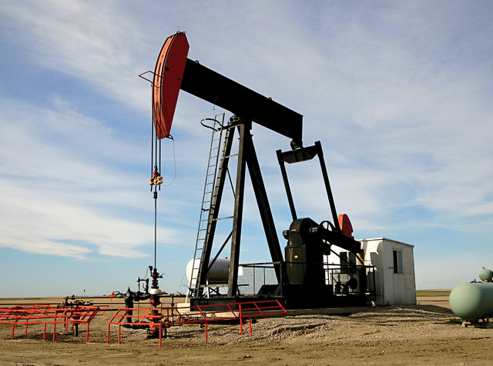
Crude Oil PumpTolfem Investments Ltd has an excellent track record of reliability in the supply of Bonny light crude oil, BLCO. We protect our buyers with 2% Performance Bond while we also expect protection from our customers with bank instrument from the world's top banks. We deliver on TTO, TTT, CIF and FOB basis.

If you wish to purchase Bonny Light Crude Oil from a reliable seller, contact us today to commence a comprehensive purchase procedure.

Crude Oil Tanker

Showing posts with label Nigerian Bonny Light Crude Oil. Show all posts

Wednesday, 4 June 2014

Baker Hughes acquires software technology company Perfomix

Baker Hughes stated the acquisition of Perfomix, a Texas-based oilfield software technology company focused on solutions to enhance oil and gas operations' performance. Perfomix will operate as a wholly-owned subsidiary of Baker Hughes and will be integrated into the company' s remote operations services organization.


Perfomix offers a data and advisory services delivery platform to support drilling, pressure pumping, completions and production operations, and regulatory reporting requirements. The addition of Perfomix will expand the Baker Hughes portfolio of field devices integration, real-time data management, visualization, and analytics software, thus complementing existing capabilities with a modern, elastically scalable and standards-based technology platform.


Providing useful resources, articles and writings on crude oil, other petroleum products, energy and gas. By Tolfem Investments Limited, online.

Monday, 19 May 2014

Kuwait sees rising crude production amid improved extraction

Kuwait plans to increase oil output 23% by 2020 as improvements in how crude can be extracted allow the third-largest producer in OPEC to pump more.


The country will boost supply to 4 MMbpd from about 3.25 MMbpd by using enhanced extraction methods, Kuwait Oil Co. CEO Hashem Hashem said at a conference in Kuwait City. The supplies include 300,000 bpd from northern oil fields and a similar amount of crude and condensates from the Jurassic natural gas project, he said.


“We have the reserves and we have a proven capability to advance projects in a timely manner; but there is always a risk that the skill mix in our organization may not be keeping up with the increased complexity of the reservoirs,” Hashem said. “It is time to be proactive and invite new approach from experience around the world to upgrade our capability.”


Oil Minister Ali Al-Omair yesterday said he saw no risk of oversupply in global oil markets because demand growth will match output increases. Brent, the benchmark for half the world’s crude, fell 2% this year on concern that increased supply from Iraq, Iran and Libya would outstrip demand and amid signs of slower economic growth in China.


Kuwait plans to spend $100 bn on oil and gas projects, according to the U.S. Energy Information Administration. It is the third-largest producer of the Organization of Petroleum Exporting Countries, after Saudi Arabia and Iraq.


As well as the additional crude supply, Kuwait plans to upgrade two of its three refineries to increase so-called clean fuels output, and build a fourth.


The nation is also building a refinery in Vietnam, planning one in China and another in India to secure markets for the crude it produces.


Enhanced oil recovery should lift production in northern fields including Sabriyah, Raudathain, Bahra and Abdali to 1 MMbpd, from about 700,000 bpd now, said Hashem. Another increase of 300,000 bpd to 350,000 bpd will come from condensates and crude produced by the Jurassic Gas project, he said. Kuwait Oil signed a deal four years ago to develop the deposit with Royal Dutch Shell Plc.


Development of heavy oil in fields across the country, including Ratqa, which require steam injection in reservoirs, will add 60,000 bpd by 2018, 120,000 bpd by 2020 and possibly 270,000 bpd by 2030, he said. A 1.2 billion-dinar ($4.3 billion) construction contract for the first phase will be awarded this year, he said.


Providing useful resources, articles and writings on crude oil, other petroleum products, energy and gas. By Tolfem Investments Limited, online.

Saturday, 17 May 2014

Statoil to cut oil sands CO2 emissions by 20%

Statoil ASA expects to decrease carbon-dioxide emissions per barrel from its Canadian oil-sands projects by 20% within six years, responding to environmental criticism of the crude production method.


Norway’s biggest energy producer said yesterday that carbon intensity from its oil-sands operations rose 25% from a year earlier to 69.7 kilograms of carbon dioxide per barrel.


Statoil is applying solvents to its steam-assisted techniques and will use valves to better direct steam to areas that need it, Staale Tungesvik, president of Canadian operations, said in a telephone interview. The Stavanger-based company also is considering different drilling techniques and more efficient water-recycling processes.


“The difference between oil sands and conventional oil production is that we use gas to heat water to create steam, so the footprint of CO2 is very much out of the generation of steam,” Tungesvik said. “We believe that we have identified technologies that will help us reach our target of reducing CO2 intensity by 20% by 2020.”


Emissions from Alberta’s oil sands have become a focal point for opposition to Calgary-based TransCanada Corp.’s Keystone XL pipeline, which would carry bitumen from the oil sands to U.S. Gulf Coast refineries. Opponents like billionaire Tom Steyer say the line would encourage companies to exploit the world’s third-largest crude reserves, unlocking vast amounts of carbon and accelerating climate change.


Carbon emissions from the oil sands won’t improve without new government policy, said PJ Partington, an Ottawa-based analyst at the Pembina Institute, an environmental think tank.


“Without more stringent policies to drive innovation and deployment of new technologies, carbon intensity is expected to remain flat for the foreseeable future,” Partington said by phone.


The intensity of greenhouse gases in oil-sands emissions fell 7.7% from 2008 to 2012, the Canadian Association of Petroleum Producers, an industry group, said in a Nov. 5 report.


Oil-sands crude is on average 9% more carbon intensive than the U.S. average on a wells-to-wheels basis, which measures CO2 emissions from the start of oil production through to combustion, according to the CAPP report.


Statoil’s carbon emissions from oil-sands production will likely decline this year, Tungesvik said. “With stable production and new technology, I would expect we’ll have lower numbers this year than we had last year,” he said.


By 2025, the Norwegian company has voluntarily targeted to reduce CO2 intensity at its oil-sands operations by 40%.


“It’s about earning more money,” Tungesvik said. “And we think that should go hand-in-hand to improve environmental impact.”


Providing useful resources, articles and writings on crude oil, other petroleum products, energy and gas. By Tolfem Investments Limited, online.

Crude Oil Tankers