Tolfem Investments Limited


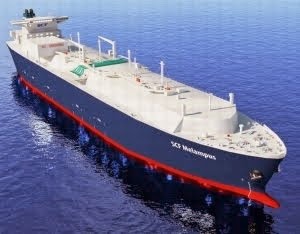
Crude Oil TankerTolfem Investments Limited is a leader in the of Nigerian Bonny Light Crude Oil (BLCO) sales market. As a privately held company, Tolfem Investments Ltd. is committed to and is focused on delivering reliable services to all her clients. Tolfem Investments Limited is determined to continue to grow in the energy sector and to become one of the recognized leaders in the Nigerian oil and gas industry.

Simplifying Nigerian Bonny Light Crude Oil Buying, BLCO

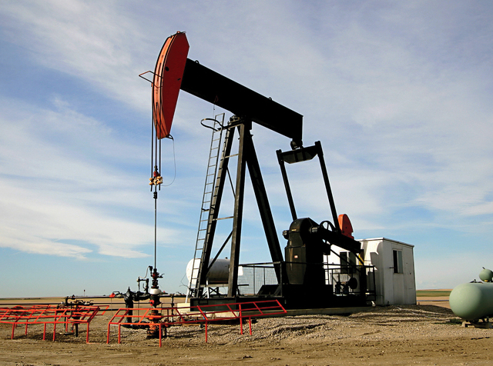
Crude Oil PumpTolfem Investments Ltd has an excellent track record of reliability in the supply of Bonny light crude oil, BLCO. We protect our buyers with 2% Performance Bond while we also expect protection from our customers with bank instrument from the world's top banks. We deliver on TTO, TTT, CIF and FOB basis.

If you wish to purchase Bonny Light Crude Oil from a reliable seller, contact us today to commence a comprehensive purchase procedure.

Crude Oil Tanker

Showing posts with label Bonny Light Crude Oil Price. Show all posts

Friday, 30 May 2014

API welcomes Senate letter from Democrats on Keystone

American Petroleum Institute President and CEO Jack Gerard has welcomed a Senate letter sent from nearly a dozen Democrats to President Obama urging him to swiftly approve the Keystone XL pipeline and put thousands of Americans to work while enhancing U.S. energy security.


“The voices of bipartisan support for KXL continue to grow louder with many of those voices coming from the president’s own party,” said Gerard. “President Obama should listen to these voices and that of the majority of Americans who are beyond tired of waiting for this project’s approval.


“Delaying the decision on the Keystone XL sends the wrong signal to the rest of the world. A nation that continues to be indecisive on a simple a matter of our own energy security will have a hard time convincing the rest of the world we can be decisive when it comes to their interests. We’ve got to get focused on Keystone approval. The world is watching. We need to send the signal: We’re serious about our domestic energy policy and our global energy policy. It’s time to approve the Keystone XL pipeline.”


Providing useful resources, articles and writings on crude oil, other petroleum products, energy and gas. By Tolfem Investments Limited, online.

Wednesday, 7 May 2014

Natural gas continues to shrink America’s carbon footprint, API says

The U.S. Environmental Protection Agency’s (EPA) latest report shows that natural gas continues to help shrink America’s carbon footprint, said API spokesman Zachary Cikanek.


“America is leading the world in reducing greenhouse gasses thanks, in part, to the revolution in natural gas production,” said Cikanek. “This latest report shows that emissions dropped an additional 3.4% from 2011 to 2012, and emissions are down 10% since 2005.”


“Innovations in hydraulic fracturing and horizontal drilling have helped make the U.S. the largest producer of natural gas in the world, and these technologies are a great example of how we can grow the economy, create jobs, and protect the environment.”


Providing useful resources, articles and writings on crude oil, other petroleum products, energy and gas. By Tolfem Investments Limited, online.

Tuesday, 29 April 2014

Natural gas futures drop as milder U.S. weather cuts fuel demand

Natural gas fell for a second day in New York on speculation that stockpiling may accelerate as milder weather reduces fuel use.


Gas dropped 1.3% as MDA Weather Services predicted seasonal or higher temperatures for most of the lower 48 states from April 19 through April 28. Prices jumped to a one-month high previous week after a government report showed that U.S. inventories rose by less than half the normal rate. Frigid weather this year sent supplies to an 11-year low in March.


“Most thermostats have been turned off or down and natural gas usage is starting to fall off in terms of heating,” said Ellen Stamm, global natural gas analyst at Schneider Electric in Louisville, Kentucky. “This week people are anticipating a larger injection. That is lending downside potential.”


Natural gas for May delivery fell 6 cents to $4.56 per MMBtu on the New York Mercantile Exchange, the lowest settlement since April 8. Volume for all futures traded was 49% below the 100-day average. Gas has gained 7.8% this year.


Unusually cold air from the Great Plains through the East Coast over the next five days will subsequently ease for the rest of the month, said MDA in Gaithersburg, Maryland.


The high in Manhattan on April 16 will drop to 51 degrees Fahrenheit, 11 below normal, before climbing a week later to 68 degrees, 4 above average, according to AccuWeather in State College, Pennsylvania.


About 49% of U.S. households use gas for heating, while power plants account for 31% of gas demand, according to the U.S. Energy Information Administration, the Energy Department’s statistical arm. Gas consumption slumps after the heating season ends and before hotter weather drives air-conditioning needs.


Inventories rose by 4 Bcf in the week ended April 4 to 826 bn, below the five-year average gain of 9 bn for the period, EIA data show. Stockpiles were at an 11-year low in the previous seven days.


Tapering heating demand means stockpile gains probably accelerated to 20 Bcf last week, Stamm said. Tim Evans, an energy analyst at Citi Futures in New York, estimated an increase gain of 36 bn, according to an April 11 note to clients. The five-year average increase for period is 37 bn.


The EIA’s next weekly stockpile report is scheduled for release on April 17.


Record gas production will help boost stockpiles to 3.422 Tcf by the end of October, which would be the lowest level before the start of the peak heating demand season since 2008, according to the EIA’s April 8 Short-Term Energy Outlook. The increase means a record 2.6 Tcf of gas will flow into storage, toppling the 2001 injection rate of 2.402 tn.


Under normal summer weather, increased shipments from the Marcellus shale deposit in the Northeast “should be sufficient” to rebuild supplies for next winter without significant new gas drilling, Jeffrey Currie, an analyst with Goldman Sachs Group, said in a note to clients dated 13 April, 2014. The bank’s three-month forecast for gas prices is $4.50 per MMBtu.


The current “uninspiring price environment” at a time when the gas industry is focused on being financially conservative has kept even more pure gas plays on the sidelines, Currie said. “As a result, a hot summer would likely trigger a strong increase in U.S. natural gas prices.” It would take a move up to $5.75 to $6.50 in gas prices to draw rigs away from oil drilling in the current crude environment of $100 a bbl, he said.


Output from the Marcellus shale will average 14.773 Bcf a day in May, up from 14.52 bn in April, the EIA said in its monthly Drilling Productivity Report.


The government estimates that total U.S. marketed gas production will expand for the ninth straight year, rising to a record 72.29 Bcf a day.


Providing useful resources, articles and writings on crude oil, other petroleum products, energy and gas. By Tolfem Investments Limited, online.

Saturday, 26 April 2014

First tanker starts loading crude from East Libya

An oil tanker started loading crude at Libya’s eastern port of Hariga as the region exports oil for the first time since July after civil unrest decimated the North African country’s production and shipments.


The Aegean Dignity started to load Hariga terminal at 11 a.m. local time, Mohamed Elharari, spokesman for state-run National Oil Corp., said by phone today. The operation will take about 24 hours. The shipment is for Italy, according to a statement from NOC subsidiary Arabian Gulf Oil.


“This is the first loading in around nine months from any of the rebel-controlled ports in the east and the first concrete positive from the deals announced just over a week ago,” Richard Mallinson, Energy Aspects analyst in London, said by phone yesterday. “But it is worth remembering that the market is only taking this as a very limited positive development” because other terminals remain shut.


Libya, the holder of Africa’s largest crude reserves, has dropped to the smallest producer among the Organization of Petroleum Exporting Countries as unrest deepened since the ouster of Muammar Qaddafi three years ago. The nation, which pumped close to 1.6 MMbpd until the start of 2011, is now producing 200,000 bpd, Elharari said April 14.


Rebels seeking a share in oil revenue for their region took control of four of Libya’s nine oil ports in July. The central government reached an agreement with some rebels earlier this month to open Hariga and Zueitina oil terminals, which have combined capacity of 180,000 bpd.


Es Sider, Libya’s largest terminal, and Ras Lanuf are still shut. State-run National Oil is in the process of lifting force majeure on Zueitina, Oil Ministry Measurement Director Ibrahim Al Awami said April 10, referring to the legal step that protects companies from liability when operations are disrupted for reasons beyond their control.


Vienna-based oil company OMV AG booked the Aegean Dignity tanker to load a cargo of Sarir crude from Hariga between April 15 and 16, two traders said on April 11, asking not to be identified because the matter isn’t public.


Providing useful resources, articles and writings on crude oil, other petroleum products, energy and gas. By Tolfem Investments Limited, online.

Sunday, 20 April 2014

OPEC will need to pump more oil after March plunge, IEA says

OPEC will need to pump more crude in the second half of the year to meet global demand after its production plunged to a five-month low in March, according to the International Energy Agency.


Supplies from the Organization of Petroleum Exporting Countries “plummeted” by 890,000 bpd to 29.62 MMbpd in March, the Paris-based IEA said in its monthly oil market report. That’s below OPEC’s collective 30 MMbbl production target and means the group will have to increase output in the second half of the year, it said. The agency’s global oil demand growth forecast was little changed.


“OPEC supply actually registered a steep drop in March from February highs, but this setback looks likely to be short-lived,” the IEA, an adviser to oil-consuming nations, said. “Prospects for OPEC output are also on the rise -- though not without considerable political risk.”


Brent crude prices have dropped 3.3% this year to trade at about $107.12 a barrel today amid rising U.S. production and signs of slowing emerging economies. The International Monetary Fund cut growth predictions for countries including Brazil, Russia, South Africa and Turkey earlier this month.


“Demand growth is lagging supply,” Andrey Kryuchenkov, an analyst at VTB Capital in London, said in an emailed response to questions. “Despite a higher call on OPEC in the second half, supplies are plentiful. It’s little surprise OPEC supplies slipped in March since demand slows.”


Production from OPEC’s 12 members dropped in March amid declines in Iraq, Saudi Arabia and Libya, the IEA said. The group, which is responsible for about 40% of world oil supplies, pumped 30.51 MMbpd in February.


OPEC will need to provide 30.6 MMbpd of crude in the second half, the agency estimated. That’s an increase of 350,000 bpd from the previous forecast, as the IEA reduced its expectations for oil production from countries including Russia and Kazakhstan.


Oil supplies from nations outside OPEC are forecast to reach 56.2 MMbpd this year, a downward revision of 200,000 bpd from the previous month, the IEA said.


Global demand is seen increasing to 92.7 MMbpd this year, little changed from last month’s report, according to the IEA. The agency trimmed its forecast for Russian oil consumption by 55,000 bpd to 3.5 MMbpd this year as its economy slows after the nation annexed Crimea.


“One month after the events in Crimea, market watchers are taking stock of their impact on oil markets,” the IEA said. “Given the still volatile nature of the situation on the ground, there are more questions than answers.”


In separate report yesterday, OPEC trimmed estimates for the amount of crude it will need to pump this year amid rising U.S. supplies, and predicted that a “supply buffer” will accumulate before demand peaks in the summer.


Providing useful resources, articles and writings on crude oil, other petroleum products, energy and gas. By Tolfem Investments Limited, online.

Saturday, 19 April 2014

Parex to focus on Colombia in bid to double production

Parex Resources Inc., the Canadian oil producer operating in Latin America, is focusing its growth efforts on Colombia as it aims to double production in the next five years.


CEO Wayne Foo is planning more land and asset acquisitions to boost the company’s output to as much as 50,000 bpd, he said in an interview at Parex’s headquarters in Calgary yesterday. Colombia’s stable government and well-understood oil resources make it a better investment than other countries in the region such as Argentina, Foo said.


“To be relevant in the market, you really have to be in the range of 25,000 to 50,000 barrels a day,” he said. Production will grow as much as 20% annually from 17,500 to 18,500 bpd this year, he said.


Parex began as an oil producer in Argentina in 2003. The Colombian business was spun off in 2009 and based in Calgary. One of about 10 Canadian energy producers operating in Colombia, Parex produces both light and medium crude in the Llanos basin.


Parex’s shares have more than doubled in the past 12 months, valuing the company at about C$1 billion ($911 million). The stock declined 2.1% yesterday, closing at C$9.50 in Toronto.


“They still have upside,” said John Stephenson, who helps oversee about C$3.1 billion at First Asset Investment Management Inc. in Toronto. “Historically they have been drilling targets that were small and they’re now going after bigger plays to add resource.”


The Canadian company has focused on purchasing land near its current holdings in the Llanos basin, boosting its position to about 2 million acres (809,371 hectares) from 250,000 acres in 2009.


Parex’s largest non-state-owned competitor is Pacific Rubiales Energy Co., a Bogota and Toronto-listed company with a market value of about C$6.7 billion. Colombia in February produced about 1 MMbpd of crude, according to the country’s Mines and Energy Ministry.


Oil transportation infrastructure has caught up with production, helping to relieve a bottleneck that existed for producers a couple of years ago, said Parex V.P. Mike Kruchten. Last year the Bicentenario line began operating, while the Ocensa pipeline has been expanded. Calgary-based Enbridge Inc. is also considering building a line to Colombia’s Pacific coast.


“At present there’s lots of excess capacity” in pipelines, said Foo.


Parex earns about 3% to 4% less on its Colombian oil than Brent crude, the global benchmark, said Kruchten. Brent crude for May settlement traded at about $106 a barrel on April 7.


Providing useful resources, articles and writings on crude oil, other petroleum products, energy and gas. By Tolfem Investments Limited, online.

Friday, 18 April 2014

Magnolia LNG, SKEC Group sign technical services agreement

Liquefied Natural Gas Limited has reported that Magnolia LNG, LCC (MLNG), its wholly-owned subsidiary, has executed a technical services agreement (TS Agreement) with SK E&C USA, Inc., a wholly-owned subsidiary of SK Engineering and Construction Co. Ltd., of Korea (SKEC Group).


The TS Agreement relates to the ongoing engineering, procurement and construction (EPC) activities for MLNG’s planned 8 mtpa Magnolia LNG Project, in Lake Charles, Louisiana.


SKEC Group has already completed a satisfactory detailed review of Liquefied Natural Gas Limited’s OSMR process technology, which will be employed in the Magnolia LNG Project, and provided the company with an initial estimated EPC cost of $1.57 bn, which was consistent with the company’s budget estimate, including appropriate contingencies.


Liquefied Natural Gas Limited’s Managing Director, Maurice Brand, said that the EPC activities remained on schedule with the SKEC Group and will be managed going forward by the recently appointed COO, John Baguley, who will commence on May 1, 2014.


“We also remain on schedule to lodge our application for Filing with the Federal Energy Regulatory Commissions on the 30 April 2014,” Brand said.


Providing useful resources, articles and writings on crude oil, other petroleum products, energy and gas. By Tolfem Investments Limited, online.

Crude Oil Tankers