Tolfem Investments Limited


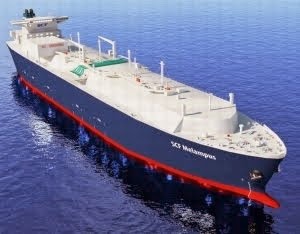
Crude Oil TankerTolfem Investments Limited is a leader in the of Nigerian Bonny Light Crude Oil (BLCO) sales market. As a privately held company, Tolfem Investments Ltd. is committed to and is focused on delivering reliable services to all her clients. Tolfem Investments Limited is determined to continue to grow in the energy sector and to become one of the recognized leaders in the Nigerian oil and gas industry.
Simplifying Nigerian Bonny Light Crude Oil Buying, BLCO

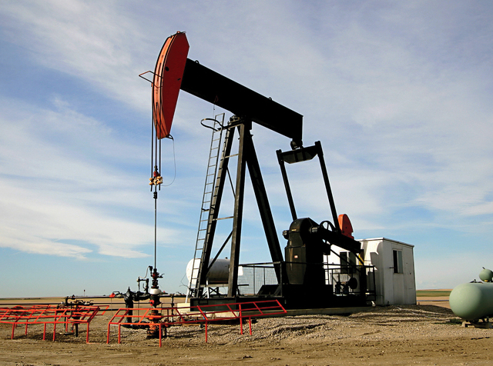
Crude Oil PumpTolfem Investments Ltd has an excellent track record of reliability in the supply of Bonny light crude oil, BLCO. We protect our buyers with 2% Performance Bond while we also expect protection from our customers with bank instrument from the world's top banks. We deliver on TTO, TTT, CIF and FOB basis.

If you wish to purchase Bonny Light Crude Oil from a reliable seller, contact us today to commence a comprehensive purchase procedure.

Crude Oil Tanker

Showing posts with label Light Crude Oil. Show all posts

Tuesday, 3 June 2014

Norway brings foreign minister home amid Ukrainian crisis, scraps Houston appearance

The worsening political and military situation in Ukraine is having far-reaching effects. As Ukrainian and pro-Russian protestors clashed over the weekend in eastern Ukraine, Norway felt compelled to bring home Foreign Minister BØrge Brende for consultations with other Western European countries about potential natural gas supply ramifications. Brende’s abrupt return to Europe also forced postponement of a long-awaited appearance Monday at Rice University’s Baker Institute, where he had been scheduled to discuss global energy challenges and opportunities, particularly for oil and natural gas, from Norway’s perspective.


Norway’s ambassador to the U.S., Kåre R. Aas, confirmed to a media briefing at the Baker Institute Monday morning that the situation in Ukraine had forced Brende to forgo his Houston visit, to return to Europe. Ambassador Aas and other Norwegian officials emphasized that while the path that the Ukrainian crisis will take over the next week is very difficult to predict, they believe that the situation ultimately requires a political solution. They pointed to Sunday’s emergency meeting of the U.N. Security Council as an important starting point in resolving the conflict. In the meantime, Norway is meeting with its NATO allies to consider what further measures, if any, should be taken to force the Russians to back down from their meddling in eastern Ukraine.


There is great concern about the short- and medium-term stability of natural gas imports coming into Western Europe from Russia, said the Norwegian officials. About one-third of European gas imports come from Norway, while roughly another third is sourced from Russia. What concerns the European countries is that half of that Russian gas has to transit pipelines that run through Ukraine. This means that 15% of Europe’s overall gas supply is directly threatened by the instability in Ukraine, which is an improvement over what could have been the proportion a few years ago. New Gazprom pipelines built via Belarus and the Baltic Sea to Germany have cut the volume of European gas imports transiting Ukraine from about 30% to 15%. Nevertheless, any significant disruption in gas supplies could threaten the fragile Western European economy.


For its part, Norway is producing 1.7 million bpd of liquids and 105 Bcm/year of natural gas. While officials confirmed that up to 70% of discovered and projected natural gas reserves in Norway have yet to be developed and put into production, adding significant capacity to the country’s gas output and exports is not a short-term proposition. Therefore, the ability to offset any Russian gas export shortfall in the short term is very small.


Ambassador Aas confirmed that Foreign Minister Brende remains committed to maintaining the special relationship between Norway and Houston, and that he will reschedule an appearance at the Baker Institute later this year.


Providing useful resources, articles and writings on crude oil, other petroleum products, energy and gas. By Tolfem Investments Limited, online.

Sunday, 25 May 2014

Regulators to require two-person crews on crude trains

U.S. regulators, acting after an oil-train derailment last year ignited a fireball that killed 47 people in Canada, said they intend to require at least two crew members for crude shipments, a proposal opposed by the railroads.


The Federal Railroad Administration also will establish minimum crew size standard for most freight trains and passenger rail lines, the agency said in a statement.


“We are committed to taking the necessary steps to assure the safety of those who work for railroads and shippers, and the residents and communities along shipping routes,” Transportation Secretary Anthony Foxx said in a statement.


The agency is acting after a train that was operated by one person was left unattended for the night in July and rolled into the center of Lac-Megantic, triggering a fatal explosion that destroyed half the town.


The Association of American Railroads, whose members include Berkshire Hathaway Inc.’s BNSF, said large railroads already run oil trains with at least two crew members.


Nevertheless, Edward Hamberger, the group’s CEO, said the Federal Railroad Administration “has never shared an iota of data that shows or proves two-person crews are safer.”


“If a regulation is proposed, then the least that can be expected is that a federal agency should back it up with grounded data that justifies the recommend rule,” Hamberger said in a statement.


FRA administrator Joseph Szabo said in the agency’s statement that two-person crews would improve the safe transport of crude oil.


Crude-by-rail shipments have soared as oil drillers employ new technologies to crack open and free oil and gas from shale formations at a faster pace than pipelines can handle.


Canadian investigators found that the brakes on the Quebec train weren’t applied with enough force. Canadian regulators have since banned one-person train crews when hauling hazardous material.


“Whether a railroad is carrying crude oil through towns across America, or people taking a well-earned vacation or commuting to work, we need to make sure people are safe, whether on the train and near the tracks,” said Senator Patty Murray, a Washington Democrat.


Murray is the chairman of the Senate Appropriations transportation subcommittee, which is holding a hearing on rail safety today.


Previously, the Transportation Department ordered energy companies using rail to ship oil to test the chemical composition of all crude before loading it on tank cars. It is also studying whether rail cars carrying crude need to be made more robust to lower the risks a derailment will cause an explosion.


Foxx told the subcommittee the oil industry has provided a minimal amount of data on the characteristics of oil from North Dakota’s Bakken shale region, which is slowing down efforts to improve the safety of transporting the fuel. Bakken crude may be more volatile than other types of oil.


Providing useful resources, articles and writings on crude oil, other petroleum products, energy and gas. By Tolfem Investments Limited, online.

Monday, 12 May 2014

Iran to maintain oil sales at 1 MMbpd into July

Iran anticipates maintaining crude exports at about 1 MMbpd until at least July when a deal with global powers over its nuclear program will be renewed or expire, the nation’s deputy oil minister said.


Iran is producing about 2.7 MMbpd, Ali Majedi said today in Dubai. Output may rise to as much as 3.7 MMbpd within six months of sanctions being lifted, he said, adding the move would also open the nation’s energy industry to investment.


The nation plans to outline a new oil development contract at a conference in London by November, offering overseas partners incentives. “We will introduce the new contract, plus some of the oil and gas fields for development,” Majedi said at the Middle East Petroleum and Gas Conference.


Iran, the fourth-largest oil producer in the Organization of Petroleum Exporting Countries, is discussing limits to its nuclear program in exchange for the removal of sanctions on its financial and energy industries. The U.S. and allies say Iran is seeking to develop atomic-weapons technology, a claim Iran denies. An interim deal between the parties expires on July 20.


The revised oil contract terms will allow for flexible payments to international companies based on crude prices and development risk, the minister said.


The country is also seeking international buyers for its gas next year when the expansion of offshore fields will boost production levels to more than domestic demand, Majedi said.


“Iran plans to increase gas exports once domestic demand is saturated,” he said. “Pipeline export is preferred to liquefied natural gas shipments” for sales to markets including Europe, Majedi said.


Providing useful resources, articles and writings on crude oil, other petroleum products, energy and gas. By Tolfem Investments Limited, online.

Friday, 25 April 2014

Aker Solutions wins subsea contract for Total's Kaombo project

Aker Solutions won a contract worth $234 bn from Total to provide a subsea production system for the Kaombo Block 32 development in Angola.


Aker Solutions will deliver 20 subsea manifolds and 65 vertical subsea wellsets. The order also includes associated controls as well as work-over and tie-in systems. The first deliveries are scheduled for the second quarter of 2015.


"This is a landmark contract and further strengthens an important relationship with a key partner," said Oyvind Eriksen, Executive Chairman of Aker Solutions."It' s a significant commercial achievement for our subsea business as well as an important strategic development in our expansion in Angola and the broader region."


Kaombo, one of the world' s largest subsea developments, is located in block 32 about 150 km off the coast of Angola.


Aker Solutions is committed to developing local content and project execution capabilities in Angola, where it employs about 130 people. The company has set up a JV with Prodiaman Oil Services, an Angolan company that will execute local content activities related to this and other future Aker Solutions subsea projects in Angola.


"I am delighted to be part of this significant project with Aker Solutions for Total," said Prodiaman' s president Pedro Godinho."I look forward to seeing that this project makes significant contributions to the education system through knowledge transfer and job creation in a high-tech industry, all for the benefit of Angola."


Aker Solutions has been in Angola since 1999.


Providing useful resources, articles and writings on crude oil, other petroleum products, energy and gas. By Tolfem Investments Limited, online.

Monday, 21 April 2014

Age of gas seen as sideshow as producers look to oil

The “golden age of gas” that the International Energy Agency foresees as a result of the U.S. energy boom is hardly the future being embraced by industry executives.


At least based on comments from company officials presenting at the Independent Petroleum Association of America’s conference in New York yesterday. For them, oil is still the prize. Gas is almost an afterthought.


Abraxas Petroleum Corp. CEO Bob Watson boasted about how much of his company’s proved reserves are oil and liquids rather than gas (74%). PDC Energy Inc. said it’s sitting on huge leases in gas fields that aren’t worth drilling. Whiting Petroleum Corp. Chairman and CEO James Volker explained why: oil sells for three times as much as the equivalent amount of natural gas.


That’s no knock against the producers for chasing oil - the commodity that makes the best return for their shareholders. Still, at a time when President Barack Obama is saying natural gas will be a bridge for the U.S. economy from fossil fuels to clean energy, the industry’s views put some realism into the discussion about what energy resources get unlocked by fracing shale rocks.


U.S. natural gas futures have plunged 72% from their 2005 peak to $4.476 as supply expanded to a record. Even after the coldest winter in decades drained stockpiles, the fuel costs about half as much as in Europe. Crude oil, by contrast, is stuck at around $100 a barrel. Even as the growth of U.S. oil supplies has brought the domestic price below the international benchmark, it’s still 7.6% higher than a year ago.


The U.S. is still very much addicted to oil. Consumption will inch up to 19 MMbbl a day this year, more than Europe and China combined, the IEA estimates. Even as expanding domestic supplies reduce imports, they haven’t curbed reliance on oil outright.


If natural gas is to be a bridge fuel, the transition can’t depend on supply alone.


Now that natural gas is so abundant, it needs more uses. While power plants are switching to gas, the U.S. still gets more electricity from coal.


Billionaire T. Boone Pickens wants trucks and buses to run on natural gas. The chemical industry is investing more than $100 bn in expansion projects spurred by cheap shale gas, according to the American Chemistry Council in Washington. And the Energy Department has approved seven projects to export about 9.3 Bcf a day of natural gas in liquid form.


In the time it takes for those new demand sources to develop, making natural gas more valuable in its own right, its role as a byproduct of oil drilling is contributing to more pollution. In North Dakota, drillers pumping oil in the Bakken shale formation are burning off about $1.4 million worth of natural gas every day.


While politicians and industry may pay lip service to natural gas as the clean fuel of the future, the companies out exploiting America’s oil fields leave no doubt that they’re interested in the same fuel as 100 years ago.


Providing useful resources, articles and writings on crude oil, other petroleum products, energy and gas. By Tolfem Investments Limited, online.

Crude Oil Tankers