Tolfem Investments Limited


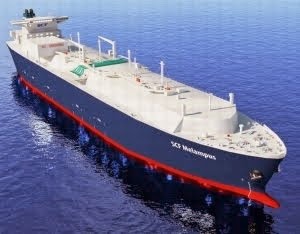
Crude Oil TankerTolfem Investments Limited is a leader in the of Nigerian Bonny Light Crude Oil (BLCO) sales market. As a privately held company, Tolfem Investments Ltd. is committed to and is focused on delivering reliable services to all her clients. Tolfem Investments Limited is determined to continue to grow in the energy sector and to become one of the recognized leaders in the Nigerian oil and gas industry.
Simplifying Nigerian Bonny Light Crude Oil Buying, BLCO

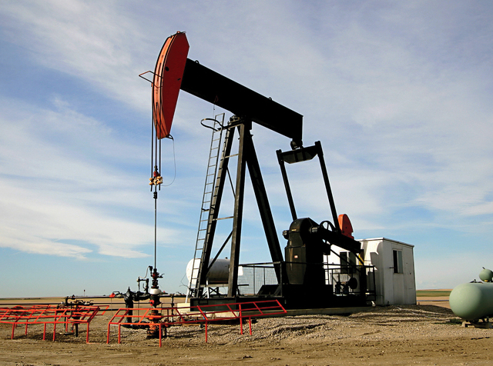
Crude Oil PumpTolfem Investments Ltd has an excellent track record of reliability in the supply of Bonny light crude oil, BLCO. We protect our buyers with 2% Performance Bond while we also expect protection from our customers with bank instrument from the world's top banks. We deliver on TTO, TTT, CIF and FOB basis.

If you wish to purchase Bonny Light Crude Oil from a reliable seller, contact us today to commence a comprehensive purchase procedure.

Crude Oil Tanker

Showing posts with label Importers Of Oil. Show all posts

Wednesday, 28 May 2014

China's natural gas output rises to highest level in 2 years

China’s natural gas production rose in March to the highest level in two years as the nation seeks to use more of the cleaner-burning fuel.


Natural gas output in the world’s largest energy consumer rose 7.6% to 11 Bcm last month, data from the National Bureau of Statistics in Beijing show. That’s the highest since March 2012. NBS didn’t release output figures for January 2013 because the data was distorted by the Lunar New Year holiday.


The Chinese government sees expanding gas supply as a way to curb air pollution that has frequently exceeded limits recommended by the World Health Organization. The National Energy Administration said in its work plan in January that gas output is forecast to rise 12% from a year earlier to 131 Bcm this year.


“Higher natural gas output was boosted by robust demand as end users continue to switch their boilers from coal-powered to gas-fed amid environmental requirements,” Wang Ruiqi, an analyst with ICIS-C1 Energy, a Shanghai-based consultancy, said by phone.


Chinese Premier Li Keqiang said at the National People’s Congress in March that pollution is a major problem and the government will "declare war" on smog by removing high-emission cars from the road and closing coal-fired furnaces.


Crude processing last month increased 2.6% from a year ago to 41.9 million metric tons, and crude output fell 0.1%  to 17.64 million tons, according to the data. Power output rose 6.2% to 452.8 billion kilowatt hours.


Providing useful resources, articles and writings on crude oil, other petroleum products, energy and gas. By Tolfem Investments Limited, online.

Sunday, 25 May 2014

Regulators to require two-person crews on crude trains

U.S. regulators, acting after an oil-train derailment last year ignited a fireball that killed 47 people in Canada, said they intend to require at least two crew members for crude shipments, a proposal opposed by the railroads.


The Federal Railroad Administration also will establish minimum crew size standard for most freight trains and passenger rail lines, the agency said in a statement.


“We are committed to taking the necessary steps to assure the safety of those who work for railroads and shippers, and the residents and communities along shipping routes,” Transportation Secretary Anthony Foxx said in a statement.


The agency is acting after a train that was operated by one person was left unattended for the night in July and rolled into the center of Lac-Megantic, triggering a fatal explosion that destroyed half the town.


The Association of American Railroads, whose members include Berkshire Hathaway Inc.’s BNSF, said large railroads already run oil trains with at least two crew members.


Nevertheless, Edward Hamberger, the group’s CEO, said the Federal Railroad Administration “has never shared an iota of data that shows or proves two-person crews are safer.”


“If a regulation is proposed, then the least that can be expected is that a federal agency should back it up with grounded data that justifies the recommend rule,” Hamberger said in a statement.


FRA administrator Joseph Szabo said in the agency’s statement that two-person crews would improve the safe transport of crude oil.


Crude-by-rail shipments have soared as oil drillers employ new technologies to crack open and free oil and gas from shale formations at a faster pace than pipelines can handle.


Canadian investigators found that the brakes on the Quebec train weren’t applied with enough force. Canadian regulators have since banned one-person train crews when hauling hazardous material.


“Whether a railroad is carrying crude oil through towns across America, or people taking a well-earned vacation or commuting to work, we need to make sure people are safe, whether on the train and near the tracks,” said Senator Patty Murray, a Washington Democrat.


Murray is the chairman of the Senate Appropriations transportation subcommittee, which is holding a hearing on rail safety today.


Previously, the Transportation Department ordered energy companies using rail to ship oil to test the chemical composition of all crude before loading it on tank cars. It is also studying whether rail cars carrying crude need to be made more robust to lower the risks a derailment will cause an explosion.


Foxx told the subcommittee the oil industry has provided a minimal amount of data on the characteristics of oil from North Dakota’s Bakken shale region, which is slowing down efforts to improve the safety of transporting the fuel. Bakken crude may be more volatile than other types of oil.


Providing useful resources, articles and writings on crude oil, other petroleum products, energy and gas. By Tolfem Investments Limited, online.

Thursday, 22 May 2014

Cub Energy commences drilling of Olgovskoye-11 well

Cub Energy reports that the Olgovskoye-11 (O-11) development well has commenced drilling. The O-11 well is operated by KUB-Gas, a partially-owned subsidiary in which Cub has a 30% effective ownership interest through its 30% shareholding of Kubgas Holdings.
 
The O-11 well will be drilled as a step out to the O-9 well for the R30c zone in the Bashkirian and an appraisal of the O-15 well in the S6 zone of the Serpukhovian. The well is located approximately one km southeast of the company’s Olgovskoye-15 (O-15), which was drilled last year and began producing from the S6 in July 2013.
 
The well will be drilled with the KUB-Gas owned K-200 drilling rig and the company expects that both zones targeted in the O-11 will require fracture stimulation.The O-11 well is expected to take approximately 70 days to reach TD.
 
The company’s Olgovskoye field comprises approximately 43% of gross KUB-Gas production and is Cub’s second-highest producing field. Given the success last year in the Serpukhovian with the O-15, and the M-16 well on the Makeevskoye field, the company’s new exploration and development efforts have been expanded to include the deeper Serpukhovian targets.


Providing useful resources, articles and writings on crude oil, other petroleum products, energy and gas. By Tolfem Investments Limited, online.

Monday, 19 May 2014

Kuwait sees rising crude production amid improved extraction

Kuwait plans to increase oil output 23% by 2020 as improvements in how crude can be extracted allow the third-largest producer in OPEC to pump more.


The country will boost supply to 4 MMbpd from about 3.25 MMbpd by using enhanced extraction methods, Kuwait Oil Co. CEO Hashem Hashem said at a conference in Kuwait City. The supplies include 300,000 bpd from northern oil fields and a similar amount of crude and condensates from the Jurassic natural gas project, he said.


“We have the reserves and we have a proven capability to advance projects in a timely manner; but there is always a risk that the skill mix in our organization may not be keeping up with the increased complexity of the reservoirs,” Hashem said. “It is time to be proactive and invite new approach from experience around the world to upgrade our capability.”


Oil Minister Ali Al-Omair yesterday said he saw no risk of oversupply in global oil markets because demand growth will match output increases. Brent, the benchmark for half the world’s crude, fell 2% this year on concern that increased supply from Iraq, Iran and Libya would outstrip demand and amid signs of slower economic growth in China.


Kuwait plans to spend $100 bn on oil and gas projects, according to the U.S. Energy Information Administration. It is the third-largest producer of the Organization of Petroleum Exporting Countries, after Saudi Arabia and Iraq.


As well as the additional crude supply, Kuwait plans to upgrade two of its three refineries to increase so-called clean fuels output, and build a fourth.


The nation is also building a refinery in Vietnam, planning one in China and another in India to secure markets for the crude it produces.


Enhanced oil recovery should lift production in northern fields including Sabriyah, Raudathain, Bahra and Abdali to 1 MMbpd, from about 700,000 bpd now, said Hashem. Another increase of 300,000 bpd to 350,000 bpd will come from condensates and crude produced by the Jurassic Gas project, he said. Kuwait Oil signed a deal four years ago to develop the deposit with Royal Dutch Shell Plc.


Development of heavy oil in fields across the country, including Ratqa, which require steam injection in reservoirs, will add 60,000 bpd by 2018, 120,000 bpd by 2020 and possibly 270,000 bpd by 2030, he said. A 1.2 billion-dinar ($4.3 billion) construction contract for the first phase will be awarded this year, he said.


Providing useful resources, articles and writings on crude oil, other petroleum products, energy and gas. By Tolfem Investments Limited, online.

Thursday, 15 May 2014

Kashagan leak probe hindered by Caspian Sea ice, Total says

A probe into the cause of a leak at Kazakhstan’s largest oilfield depends on inspection of offshore installations that has to wait until ice melts on the Caspian Sea, one of the partners in the project said.


“It’s melting as we speak,” Arnaud Breuillac, Total SA head of exploration and production, said at an oil conference in Paris. “Until we have the result of this analysis, we can’t say what is the extent of the problem or how long it’ll take to fix it.”


Output may resume at the end of the year after 180 km (112 mi) of pipelines are inspected, the field’s biggest stakeholder KazMunaiGaz National Co. has said. A full inspection of both oil and gas pipelines, each about 90 km long, was done using a probe known as an intelligent pig.


Kashagan, where production began in September after being delayed several times from the original plan in 2005, was producing about 60,000 bpd before a leak stopped the field on Oct. 9. The project included drilling from a man-made island to unlock crude 4.2 km under the seabed in a pressurized reservoir with a high concentration of poisonous sour gas.


“We have to confirm data from intelligent pigging inside the pipeline with calibrations from outside” to understand the data, Breuillac said today. “Hopefully we should know soon the potential work that has to be done to repair the problem.”


Should production start up this year “it would not be much,” he said.


Exxon Mobil Corp., Royal Dutch Shell Plc, Total and Eni SpA each hold 16.81% in the project. Japan’s Inpex Corp. owns 7.56%. State-owned KazMunaiGaz National Co. retains 16.88%. China National Petroleum Corp. bought an 8.33% stake in September.


Providing useful resources, articles and writings on crude oil, other petroleum products, energy and gas. By Tolfem Investments Limited, online.

Sunday, 27 April 2014

Aker Solutions to supply subsea manifolds for Petrobras pre-salt fields

Aker Solutions won a contract worth more than $300 mn from Petrobras to supply eight manifolds that alternately inject water and gas to increase oil recovery from Brazil' s deepwater offshore fields.


The subsea manifolds, designed for water depths of 2,500 m, will be installed by Petrobras and its partners in deepwater pre-salt field developments.The units have a design life of 30 years and the first is scheduled to be delivered in 2016.
 
"We are pleased to work with Petrobras on its important and technically challenging pre-salt developments," said Oyvind Eriksen, executive chairman of Aker Solutions. "Brazil is a key market for our subsea technology and one of the fastest growing areas in the oil and gas industry."


The order will be executed by Aker Solutions' Brazilian subsea division. The unit last year began work to double its subsea equipment manufacturing capacity at a plant in Curitiba by 2015. About 70% of the contract with Petrobras will be procured and manufactured in Brazil.
 
"Aker Solutions is committed to delivering high local content in Brazil, where demand for complex subsea production equipment is growing," said Luis Araujo, president for Aker Solutions in Brazil.
 
The manifolds will play a key part in the crucial injection process that helps improve recovery from the fields.


Providing useful resources, articles and writings on crude oil, other petroleum products, energy and gas. By Tolfem Investments Limited, online.

Thursday, 17 April 2014

Oil India said to study purchase of Shell's Nigerian oil blocks

Oil India Ltd. is studying an acquisition of Nigerian oil and gas assets owned by Royal Dutch Shell Plc, according to people familiar with the matter.


Oil India is weighing a bid for stakes Shell holds in some onshore blocks, valued at as much as $2 billion, the people said. It will partner with India’s Sandesara Group on the potential purchase, according to the people, who asked not to be identified as the deliberations are private.


The explorer joins Dangote Group, controlled by Africa’s richest man, and Seplat Petroleum Development Co. in seeking to acquire Nigerian assets being sold by Western rivals. Shell and Chevron Corp. are divesting fields in the country amid persistent violence and crude theft in the oil-rich Niger River delta.


India’s government-run oil companies are building on their record $5.5 billion of acquisitions last year to secure supplies for Asia’s second-biggest energy consumer. Oil India, which had 124.9 billion rupees of cash at the end of September, has purchased stakes in gas fields in Mozambique and shale assets in the U.S. over the past two years.


Oil India Chairman S.K. Srivastava and finance director Rupshikha Saikia Borah didn’t answer two calls each to their mobile phones seeking comment. Sandesara Group Chairman Nitin Sandesara didn’t immediately respond to an email and phone call to his office.


Sterling Energy & Exploration Production Ltd., a unit of Sandesara Group, has more than 250 MMbbl of certified oil reserves and 1 Tcf of natural gas reserves in the Niger Delta, according to its website. Nigeria pumped about 2.1 MMbpd last month, data compiled by Bloomberg show.


Shell said in October divestments in India have been deferred to 2014. The Anglo-Dutch company’s earnings in the country were curbed by almost $1 billion last year because of oil theft and a LNG export blockade by the government, CFO Simon Henry said March 13.


Earlier this year, Oil & Natural Gas Corp. and Oil India paid $2.5 billion for a 10% stake in a Mozambique natural gas field. Securing fuel supplies is crucial for Prime Minister Manmohan Singh as India relies on imports to meet about three-quarters of its oil requirements.


Seplat Petroleum, based in Lagos, and its partners are bidding for two Nigerian oil and gas permits Shell is selling, Chairman A.B.C. Orjiako said March 11. Dangote Group is in talks to purchase onshore oil blocks in the country as international companies sell assets, Group Executive Director said in January.


Providing useful resources, articles and writings on crude oil, other petroleum products, energy and gas. By Tolfem Investments Limited, online.

Crude Oil Tankers